
Doctor of Philosophy (Ph.D.)
Literature
University of California, San Diego
2007
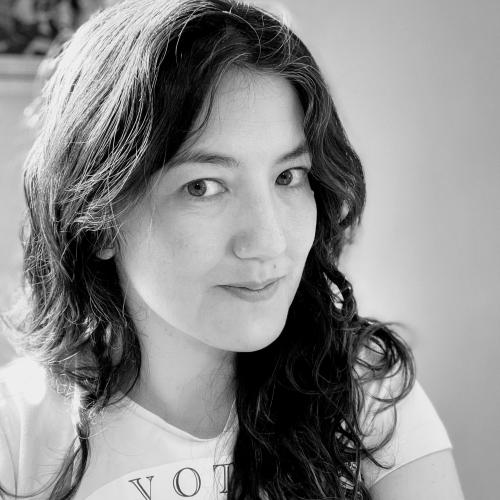
Emily MN Kugler, Ph.D. is an associate professor in the Department of English of Howard University. She earned my B.A. from Scripps Women's College and my Ph.D. in Literature from the University of California, San Diego. Her work touches on histories of enslavement, empire, literary/print networks, digital humanities, gender/queer studies, and games studies.
Kugler has published on a range of eighteenth-century subjects from representations of the Sultana Roxelana/Hürrem Sultan to the autobiography of Olaudah Equiano. My first book, Sway of the Ottoman Empire on English Identity in the Long Eighteenth Century, was published by Brill in 2012. She also co-edited and contributed to the edited volume Ottoman Empire And European Theatre. Vol. III: Images Of The Harem In Literature And Theatre, part of the Don Juan Archiv in Vienna's Ottomania series.
Recent publications include: a pedagogical chapter on women's participation in British abolition in Robin Runia's (Xavier University of Lousiana) The Future of Feminist Eighteenth-Century Scholarship: Beyond Recovery (Routledge 2017); and a Special Issue of ABO: Interactive Journal for Women in the Arts, 1640-1830 on Camp in the 18th Century 9.1 (2019) co-edited with Dr. Ula Klein (University of Wisconsin-Osh Kosh).
Kugler works with Dr. Emily Friedman (Auburn University) on projects involving game studies, with a focus on representations of race, gender, and sexuality in tabletop and video games set in the long eighteenth century, including a JASNA article and talks on our YouTube channel, Critical Prof. Here is a playlist some of our public talks.
Our most recent publication is "Playable Partners: Spectrums of Queer Possibility in Indie Video Game" in The 18th Century Today: Literature and Media from Beauty and the Beast to Bridgerton (Bloomsbury, November 2025), edited by Emrys D. Jones (King's College London, UK) and Madeleine Pelling (University of York, UK).
To schedule an online appointment, please see my Calendly: https://calendly.com/emnkugler
Literature
University of California, San Diego
2007
Literatures in English
University of California, San Diego
2005
English with Honors; Asian American Studies Minor
Scripps College
2002
2021; American Council of Learned Societies (ACLA) Digital Extension Grant for Hidden Archives: Race, Gender, and Religion in UCSB’s Ballitore Collection, with Dr. Rachael Scarborough King (PI, U.C. Santa Barbara) and Dr. Danielle Spratt (California State University, Northridge)
2020-2021, 2018-2019; UC-HBCU Initiative, partnered with Dr. Rachael Scarborough King (U.C. Santa Barbara)
2020 Funding for "Empathy, Storytelling, and Film in Engineering”: Collaboration with Virginia Tech University’s Bright C.S. (co-taught STEAM program for BIPOC middle school girls) and Arlington Public School District
2015-2019 Reginald Lewis Endowment Travel Fund, Howard University
2016-2017 Junior Faculty Writing and Creative Works Summer Academy. Howard University
2016-2017 Junior Faculty Research Fund, English Department, Howard University
2016 DGSI: Seshat: A Digital Humanities Initiative, Howard University
2014-2015 Scholar Travel Grant, Modern Language Association
For Hidden Archives: Race, Gender, and Religion in UCSB’s Ballitore Collection, with Dr. Rachael Scarborough King (PI, U.C. Santa Barbara) and Dr. Danielle Spratt (California State University, Northridge)
Partnered with Dr. Rachael Scarborough King (U.C. Santa Barbara)
Collaboration with Virginia Tech University’s Bright C.S. (co-taught STEAM program for BIPOC middle school girls) and Arlington Public School District
Read: Rhode Island Public Radio | Memorializing the Enslaved in Rhode Island: the Middle Passage Port Markers Project
Read: The Brown Daily Herald | City Council votes to memorialize slave trade
The Sway of the Ottoman Empire on English Identity in the Long Eighteenth Century (Publisher book page; ebook available through an institutional subscription). Studies in Intellectual History.
This book challenges concepts of an ahistorically powerful England and shows both that the intermingling of Islamic and English Protestant identity was a recurring theme of the eighteenth century, and that this cultural mixing was a topic of debate and anxiety in the English cultural imagination. It charts the way representation of England and the Ottomans changed as England grew into an imperial power. By focusing on texts dealing with the Ottomans, the author argues that we can observe the turning point in public perceptions, the moments when English subjects began to believe British imperial power was a reality rather than an aspiration.
Special Issue: Eighteenth-Century Camp ABO: Interactive Journal for Women in the Arts, 1640-1830 9.1 (2019)
In this special issue on “camp” and/in the long eighteenth century, we hold that this is not just a twentieth-century reference to an imagined past, but a concept that indeed does have its roots in eighteenth-century Europe. It is also a concept deeply rooted in constructions of gender and, whether implicitly or explicitly, a vital element in the lives of long eighteenth-century female artists, writers, and thinkers.
While “Ottomania” deals with Ottoman–European cultural transfers and questions of Orientalism–Occidentalism in general, the latter focuses on theatre, music, arts and literature. The preceding volumes directed attention to musical interconnections and the works of composers such as Wolfgang Amadé Mozart (1756–1791) or Joseph Haydn (1732–1809). The present volume points more toward poetry and literature by devoting this edition to two populartopics of the long eighteenth century. It expands a subject that earlier volumes had touched upon but not explored in depth, one of the most popular subjects of eighteenth-century theatre and literature: the seraglio and its harem.
Chapter 6: Fantasies of Emancipation: Collaborations and Contestations in The History of Mary Prince in The Future of Feminist Eighteenth-Century Scholarship: Beyond Recovery
There is an unfortunate argument being made that feminist scholarship of eighteenth-century literary studies has fulfilled its potential in academic circles. The Future of Eighteenth-Century Feminist Scholarship: Beyond Recovery shows us otherwise. Each of the essays in this volume reaffirms the feminist principles that form the foundation of this area, then builds upon them by acknowledging the inevitable conflicts they or their subjects have faced and the contradictions they or their subjects have lived.
In ACT 1: Playing the Sultana: Erotic Capital and Commerce in Defoe’s Roxana in Ottoman Empire and European Theatre Vol. III – Images of the Harem in Literature and Theatre. A Commemoration of the Bicentenary of Lord Byron's Sojourn in the Ottoman Capital (1810).
In Roxana, the Fortunate Mistress (1724), attributed to Daniel Defoe (1660–1731), the heroine goes by many names over the course of her narrative, but only one of these is known to the readers: Roxana.1 Though earned late in the text, this appellation emerges as the identity that cannot be shed by its performer and the one that comes to define her as the character and a narrative.
In Part 2: Loving the Unstable Text and Times of Equiano’s Narrative: Using Carretta’s Biography in the Classroom in Teaching Olaudah Equiano's Narrative: Pedagogical Strategies and New Perspectives. (pp. 119-136)
In this collection of essays, most of them never before published, sixteen teacher-scholars focus explicitly on the various classroom contexts in which the Narrative can be assigned and various pedagogical strategies that can be used to help students understand the text and its complex cultural, intellectual, literary, and historical implications.