
Doctorate of Pharmacy (Pharm. D.)
Pharmacy
Shenandoah University
2001
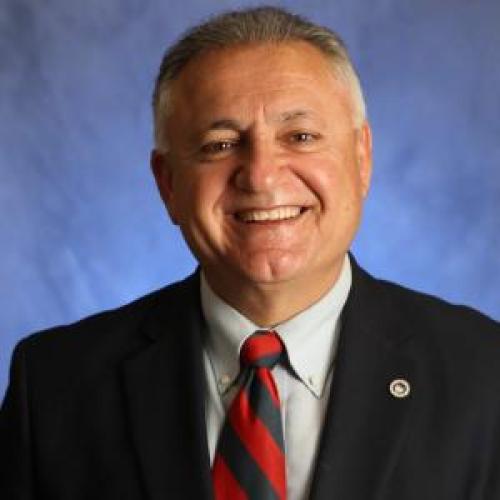
Youness R. Karodeh, Pharm.D., RPh. is an associate professor and assistant dean of the External Program in the College of Pharmacy. He received his Bachelor of Science Degree in Pharmacy from Howard University College of Pharmacy in 1986, and Doctorate in Pharmacy from Shenandoah University in 2001.
Karodeh took the Bachelor of Science (B. Pharm) Degree in Pharmacy from Howard University College of Pharmacy, Washington, DC, in 1986, and the Doctor of Pharmacy (Pharm.D) Degree from Shenandoah University, Winchester, Virginia in 2001.
Karodeh's passion for teaching augmented with his earlier positive and fulfilling experiences from teaching and tutoring his classmates in pharmacy school guided him to start serving College of Pharmacy as a preceptor, in a community setting short distance from Howard University, in 1990 and continued throughout his adjunct faculty appointment in 2001. In 2002 he was appointed as the founding and inaugural Director of Nontraditional Doctor of Pharmacy (NTDP) Degree Program, a Distance Learning for Working Pharmacists, which was offered for the first time by Howard University College of Pharmacy and continues to be offered to this date.
Karodeh is passionate about teaching and learning and spent a significant part of his professional and academic career teaching, training and developing best pharmacists in the world. He often encouraged his mentees/advisees to reach beyond what they felt was possible. As such, in spring 2018, Karodeh, in collaboration with his former student, Dr. Babatunde Osun, established an endowed Scholarship with an initial amount of $30,000.00, in recognition of the importance of Postgraduate Residencies Training that are becoming increasingly a popular option due to pharmacy dynamic and ever-changing employment market. “Completing a pharmacy residency after graduation is a great way to begin a career in clinical pharmacy” said Dr. Karodeh because Drs. Karodeh and Osun believe that additional years of training shall provide Howard University College of Pharmacy (HUCOP) graduates better preparation for a specific position nationally and globally. Furthermore, residency training also provides graduates with the opportunity for interprofessional collaboration, instills personal and professional confidence, provides avenues in which to advocate for the profession of pharmacy, and broadens clinical decision-making abilities. With the profession of pharmacy becoming an increasingly clinically focused profession, residency training enables a pharmacist to practice at the “top of their license” and provide exceptional patient care. It can also enable a pharmacist to become a sought-after candidate by employers. The Drs. Karodeh and Osun Scholarship is presented annually to up to (3) recipients with a scholarship of $500 each.
As indicated in his curriculum vitae, Karodeh has been active in publishing pharmacy related articles, papers, abstracts and presenting posters in national and international professional meetings and conventions in addition to being on the Editorial Board of Archives of Pharmacy Practice, he is also a recipient of sizable grant and awards.
Karodeh’s Passion for improved quality of life through education has enabled him to extensively travel and speak in numerous Pharmacy Continuing Education programs throughout the country and the world, including; Kuwait, Ethiopia, India, Iran and Cuba just to mention a few.
Karodeh’s tireless efforts in upgrading his teaching and leadership skills and knowledge has earned him many certificates such as “Delivering Medication Therapy Management Services in the Community,” “OTC Advisor Pharmacy Based Self-Care Service,” “Physical Assessment in Patient Care Management,” “Pharmacy Based Immunization Delivery,” “Trainer, the certificate faculty training program” and “Pharmaceutical Care for Patients with Diabetes,” “ Completed the Conference on Leadership Development and Teambuilding Program, SkillPath Seminar in 2017,” Chair Leadership Academy, Office of Faculty Development, Office of the Provost and Chief Academic Officer. Grooming the Next Generation of Academic Leaders. Sep 2017 to June 2018,” and “Faculty selected to the American Association of Colleges of Pharmacy (AACP) 2019-2020 Academic Leadership Fellows Program (ALFP).”
As a licensed pharmacist in the District of Columbia and State of Maryland, Dr. Karodeh still continues to practice his beloved profession, as time permits, believing that practitioners make more effective teachers.
Karodeh also believes in giving back to the local and global communities. As such, he continues to serve as an Officer in his local Community Association Board, also as a Volunteer member in the State of Maryland Professional Volunteer Corp (MPVC), and Maryland Pharmacy Emergency Response Team, since September 2001. Karodeh continues his services as a health-care consultant to the Sofi Development Association (SoDA), a Non-governmental Organization (NGO) serving people of Ethiopia in North Africa. Dr. Karodeh is co-founder and president of Iranian Pharmaceutical Association (IPhA).
Karodeh is currently serving his Alma Mater in different capacities; Assistant Dean for External and NTDP programs, Associate Professor, and Director of the Nontraditional Doctor of Pharmacy (NTDP) Degree Program.
Karodeh is a recipient of 2011 the “Distinguished Faculty of the Year Award” at his Alma Mater, Howard University College of Pharmacy, Washington, D.C.
Pharmacy
Shenandoah University
2001
Pharmacy
Howard University
1986
Pre-pharmacy
Montgomery College
1981
Content Reviewer: The Opioid Analgesic REMS Program Companies, Second Cycle, Food & Drug Administration (FDA)/REMS Producing Companies (RRPC).April 2020. $117,781.00.
Co-Investigator: Prevalence of Adolescent Obesity and Hypertension amonG D.C. Public High School Students: A Pilot Project. January 2012. $20,000.00.
Rapid changes in the current US health care system, especially in the fields of pharmacy and pharmaceutical sciences, require practicing pharmacists to acquire new knowledge and skills. Despite the growth of opportunities for pharmacists within new spaces such as nanotechnology, informatics, and pharmacogenomics, those without a Doctor of Pharmacy (PharmD) degree could be eliminated from consideration by employers who seek new graduates with more contemporary training and skills. The purpose of this study was to determine what associations exist between student success within a nontraditional Doctor of Pharmacy (NTDP) program and certain demographic factors.