Bachelor of Science (B.S.)
Biology (Concentration: Marine and Freshwater Biology)
University of New Hampshire
2010
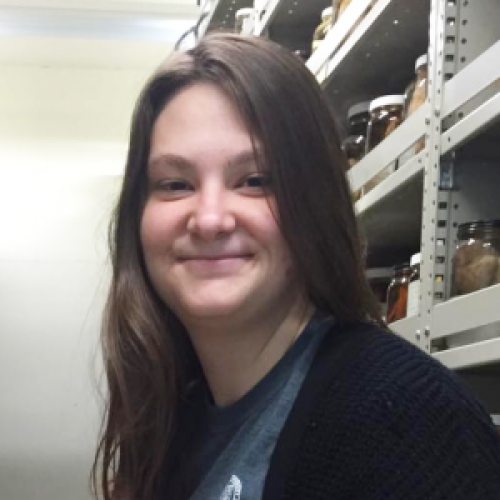
Stacy Farina, Ph.D. is an associate professor in the Department of Biology at Howard University in Washington, D.C. She joined Howard University in 2018 after completing postdoctoral research in evolutionary biology at Harvard University’s Museum of Comparative Zoology and Department of Organismic and Evolutionary Biology, where she was supported by an NSF postdoctoral fellowship. Farina earned her doctorate in evolutionary biology from Cornell University and her Bachelor of Science in marine and freshwater biology, summa cum laude, from the University of New Hampshire.
Farina’s research focuses on functional morphology, evolutionary morphology, biomechanics and ichthyology. Her work investigates how evolutionary processes shape complex anatomical structures used across multiple biomechanical systems, such as fish gill chambers, and integrates techniques including 3D anatomical visualization, physical and computational modeling, phylogenetic methods and physiological experiments. She has published and presented her findings in peer-reviewed scientific journals and at professional conferences and has received external funding for her research.
At Howard University, Farina teaches undergraduate and graduate courses in general biology, comparative vertebrate anatomy, biomechanics and biological writing. She mentors students in research through the Farina Lab, which offers hands-on training in cutting-edge approaches to organismal biology and evolutionary science. Farina is also active in professional organizations, including the Society for Integrative and Comparative Biology and the American Society of Ichthyologists and Herpetologists.
Office Location: Just Hall Room 332
Office Telephone: (202) 806-6926
Laboratory Location: Just Hall Room 410
Google Scholar: https://scholar.google.com/citations?user=2sdrtaMAAAAJ&hl=en
Biology (Concentration: Marine and Freshwater Biology)
University of New Hampshire
2010
Evolutionary Biology
Cornell University
2015
NSF HBCU-UP Catalyst Project: Evolution and biomechanics of multifunctional structures (HRD-2000268: PI: SC Farina, Award: $199,992)
NSF HBCU-UP Targeted Infusion Project: Inspiring, Engaging and Retaining Underrepresented Students in Computing Research and the Emerging Field of Data Science (HRD-2011933; PI: CM Lee, Co-PIs: SC Farina, S Teng, A Duttaroy, Award: $400,000)
NSF REU Site 1852096 (2019-2022) [Co-PI]
NSF PRFB DBI-1523836 (2015-2017) [PI]
NSF DDIG DEB-1310812 (2013-2015) [PI]
Research Detailed:
How does evolution shape bones and muscles that are used across multiple biomechanical systems? This question has inspired my interest in fish gill ventilation and gill chambers. Gill ventilatory pumping in fishes requires the use of more than 20 individual bones and 8 distinct muscles, most of which are also used in suction feeding, coughing, burial, jet propulsion, and other behaviors. This makes fish gill chambers highly multifunctional. Multifunctionality is thought to constrain morphological evolution, but the multifunctionality of gill chambers does not appear to have limited fish skull diversity. How is this possible? In the Farina Lab, we integrate a number of approaches to address this and other questions, including 3D anatomical visualizations using micro-CT, physical and computational modeling, phylogenetic comparative methods, and physiological laboratory and field experiments. The Farina Lab offers diverse and cutting-edge training opportunities for graduate and undergraduate researchers.
Laboratory Personnel:
Jaida Elcock - Laboratory Technician
Kyra Amacker - Undergraduate Researcher
Patricia Mensah - Undergraduate Researcher
Joshua West - Undergraduate Researcher
Darius Carter - Undergraduate Researcher
Ashton Gabriel - Undergraduate Researcher
Sierra Reese - Undergraduate Researcher
Kela Bakari - Undergraduate Researcher
Jamaica Simmons - Undergraduate Researcher
Malik Chennault - Undergraduate Researcher
Sydney Stevens - Undergraduate Researcher
Sierra Reese - Undergraduate Researcher
Memberships and Professional Appointments
Society for Integrative and Comparative Biology (2009-Present)
American Society of Ichthyologists and Herpetologists (2010-Present)
Sigma Xi Scientific Research Honor Society (2012-Present)
Read: Undark | New Evidence Revives Old Questions About E.O. Wilson and Race
Read: Hakai Magazine | This Fish Can Hold Its Breath
Read: Smithsonian Magazine | Coffinfish Can Hold Their Breath for Up to Four Minutes on the Ocean Floor
Read: National Geographic | This odd deep sea fish can hold its breath for four minutes
The mechanics of ventilation in elasmobranchs have been described as a two-pump system which is dependent on the generation of differential pressures between the orobranchial and parabranchial cavities. However, this general model does not take into account sources of variation in parabranchial form and function. For example, the relative pressures that drive flow in each parabranchial chamber during ventilation remain largely unexplored. To address this gap, parabranchial pressures were collected from the Pacific spiny dogfish (Squalus suckleyi, n = 12) during routine ventilation using transducers inserted into parabranchial chambers 2, 3, and 5, numbered anteriorly to posteriorly.
Functional morphology of the urohyal shunt for symmetrical and asymmetrical ventilation in the flatfish, Isopsetta isolepis in Integrative and Comparative Biology, 62(4), pp.897-907
Our study examines whether the kinematics and pressures generated by the gill chambers are also symmetrical during breathing above and below the sediment and during rapid burial in sediment. We studied Isopsetta isolepis individuals using sonomicrometry crystals to measure the changes in positions of the opercle bones relative to the urohyal and pressure transducers to record gill chamber pressures during burial.
Integration drives rapid phenotypic evolution in flatfishes
The evolution of cranial asymmetry in flatfishes (Pleuronectiformes) from within Carangaria was a rapid evolutionary innovation that preceded the colonization of benthic aquatic habitats by this clade, and resulted in one of the most bizarre body plans observed among extant vertebrates. Here, we use three-dimensional geometric morphometrics and a phylogenetic comparative toolkit to reconstruct the evolution of skull shape in carangarians, and quantify patterns of integration and modularity across the skull.
Functional coupling in the evolution of suction feeding and gill ventilation of sculpins
Functional coupling, functional coordination, and evolutionary integration have each been proposed to limit morphological diversification to some extent. Yet teleosts show extraordinary cranial diversity, suggesting that there are mechanisms within some teleost clades that promote morphological diversification, even within the highly integrated suction feeding and gill ventilatory systems. To investigate this, we quantified evolutionary integration among four mechanical units associated with suction feeding and gill ventilation in a diverse clade of benthic, primarily suction-feeding fishes (Cottoidei; sculpins and relatives).
Pharyngeal jaws converge by similar means, not to similar ends, when minnows
Within the North American leuciscids, many genera contain at least one herbivore, insectivore, and larvaphage. We created 3D models from micro-computed tomography scans of 165 leuciscid species to measure functionally relevant traits within the pharyngeal jaws of these fishes. Using a published phylogeny, we tested these metrics for evolutionary integration, phylogenetic signal, and correlation with diet. Measurements of the pharyngeal jaws, muscle attachment areas, and teeth showed strong positive evolutionary correlation with each other and negative evolutionary correlation with measurements of the inter-ceratobranchial ligament (ICB ligament).
For this study, we combined analysis of publicly available video recorded by remote-operated vehicles (ROV) with detailed anatomical study of museum specimens to document the functional morphology of the massive gill chambers that are observed in coffinfishes (Lophiiformes: Chaunacidae).
Sculpins primarily rely on suction feeding for prey capture, but there is considerable variation in evasiveness of their prey, resulting in variation in anatomy of the lower jaw-closing mechanism. We used functionally-relevant linear measurements to characterize skeletal and muscular components of this system among 25 cottoid species and two outgroup Hexagrammoidei (greenling) species.
Effects of organism and substrate size on burial mechanics of English sole, Parophrys vetulus
We quantified the effects of organism and particle-size scaling on burial behavior of English sole, Parophrys vetulus We recorded burial events from a size range of individuals (5-32 cm total length, TL), while maintaining constant substrate grain size. Larger fish used lower cycle frequencies and took longer to bury, but overall burial performance was maintained (∼100% coverage). To test the effect of particle size on burial performance, individuals of similar lengths (5.7-8.1 cm TL) were presented with different substrate sizes (0.125-0.710 mm).
Banning DEI Is Catastrophic for U.S. Science
An attack on DEI is an attack on science itself, Joseph L. Graves Jr., Stacy C. Farina, Parvin Shahrestani, Vaughn S. Cooper and Gilda A. Barabino write.
Historically Black Colleges and Universities Have Affirmative Action Solutions. But They Need Help
The Supreme Court undermined affirmative action at prestige universities. We need a new science and technology agenda at every school, one that includes historically underserved people.
Why Scientists Must Stand for Affirmative Action and against Scientific Racism
On June 29 the U.S. Supreme Court overturned universities' ability to consider race in admissions. In this October 2022 opinion piece, two researchers reflect on scientists' responsibility to combat racism and defend affirmative action.