Master of Arts (M.A.)
Broadcast Management
Ohio University
1984
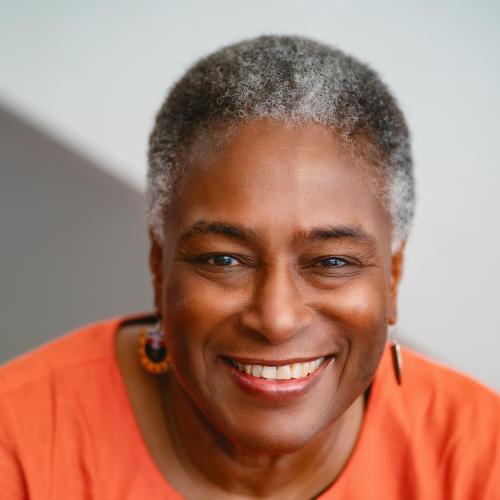
Sonja D. Williams is a professor in the Department of Media, Journalism and Film at the Howard University School of Communications. Throughout her professional career, Sonja Williams has served as an educator as well as an award-winning writer and producer of features and documentaries for National Public Radio (NPR), Public Radio International (PRI), the Smithsonian Institution and radio stations nationwide. Also, she has worked as a journalist and media trainer in Africa, the Caribbean, and the United States. Currently she co-produces and edits BIO, a podcast series sponsored by the Biographers International Organization.
Williams’ book, Word Warrior: Richard Durham, Radio, and Freedom was published by University of Illinois Press in 2015. The audiobook version of this biography was published by Blackstone Publishing in 2018. Richard Durham was a pioneering African American writer and gifted broadcast dramatist who was posthumously inducted into the National Radio Hall of Fame in 2007.
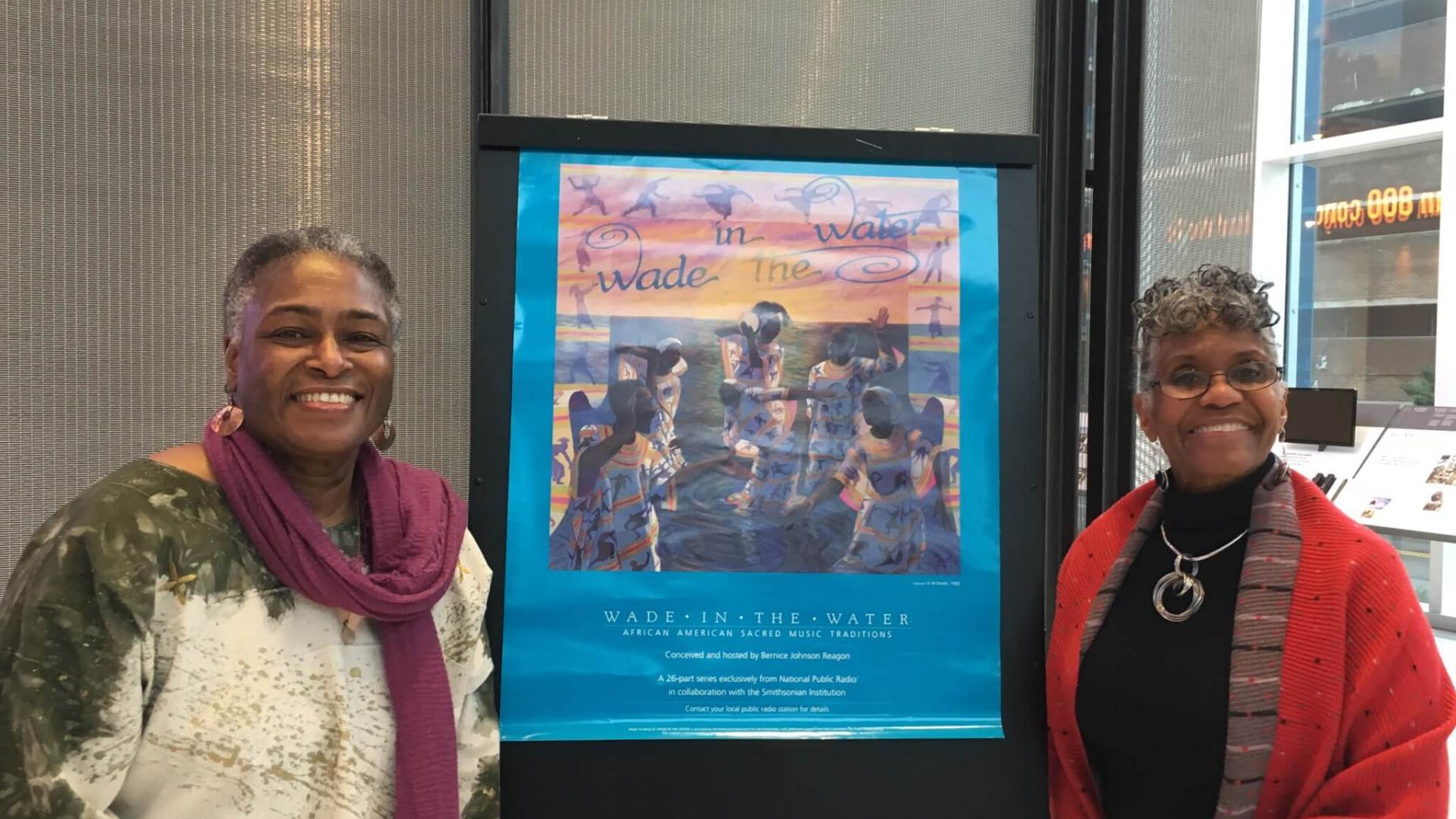
For three consecutive years, Williams received one of the broadcast/cable industry’s most prestigious honors, the George Foster Peabody Award for Significant and Meritorious Achievement. She was so honored for her role as a writer/producer for the NPR/Smithsonian series Wade in the Water: African American Sacred Music Traditions, the NPR series Making the Music, and the PRI/Smithsonian series Black Radio: Telling It like It Was. In addition, Williams’ Howard University students received Robert F. Kennedy Journalism Award recognition (nicknamed the “Poor People’s Pulitzer”) for their documentary special In Touch: AIDS in the African American Community.
Williams has received fellowship support for her work from the Black Metropolis Research Consortium, the Vivian G. Harsh Society, the National Association of Television Program Executives, and the U.S. Department of Defense.
Broadcast Management
Ohio University
1984
Communications
Columbia College Chicago
1975
Black Metropolis Research Consortium Summer Short Term Research Fellowship, Affirmative Lives, Chicago, IL, 2017
Timuel D. Black Short Term Fellowship in African American Studies, Vivian G. Harsh Society, Chicago, IL, Richard Durham: Destined for Freedom, 2009
Howard University Faculty Research Program in the Social Sciences, Humanities & Education, Richard Durham: A Writing Life, Washington, DC, 2002-2003
Netherlands Institute for Southern Africa Research Grant, Voices of Change: Communications and Resistance in Apartheid South Africa, Cape Town, South Africa, 2001-2002
National Association of Television Program Executives, Fellowship, New Orleans, LA, January 1998.
United States Department of Defense, Historically Black Colleges and Universities (HBCU) Faculty Summer Fellowship, Washington, DC, 1994 & 1995.
Howard University New Faculty Development Grant, Alternatives: One Woman’s Fight Against AIDS, Washington, DC/Nairobi, Kenya, 1991-1992
Edward L. Bliss Award for Distinguished Broadcast Journalism Education, Association for Education in Journalism and Mass Communication, San Francisco, CA, August 8, 2025.
Ray A. Shepard Service Award, Biographers International Organization, 2021
Faculty Scholar Coach, Junior Faculty Writing and Creative Works Summer Academy, Howard University, 2018-2021
Finalist, Wheatley Book Awards, Harlem NY, 2016
Uncrowned Queens: Voices of African American Women, 13-part series, WNED- Buffalo, American Women in Radio and Television "Gracie Allen" Award for Outstanding Documentary – Mid-Length Format, 2009
Jazz Singers, 13-part Smithsonian Productions radio series, Broadcast Education Association Faculty Production Award, 2002
Black Radio: Telling It Like It Was, 13-part series, Radio Smithsonian, 1996, George Foster Peabody Award for Significant & Meritorious Achievement; American Women in Radio and Television "Gracie Allen" Award for Black Radio: A Woman’s Touch; Alfred I. duPont/Columbia University Silver Baton Award for Excellence in Broadcast Journalism
Making the Music, 26-part series, NPR, Washington, DC, George Foster Peabody Award for Significant & Meritorious Achievement, 1995.
Wade in the Water: African American Sacred Music Traditions, NPR/Smithsonian, 1994, George Foster Peabody Award for Significant & Meritorious Achievement; National Education Association Award for the Advancement of Learning Through Broadcasting; Corporation for Public Broadcasting “Gold” Award for Documentary Excellence; National Association of Black Journalists Award
Read: Houston Public Media | The Future ‘Shift Key’ in Journalism
Listen: Out of the Rehearsal Hall | Episode 2-1: Sonja D. Williams
Watch: WTTW Chicago | ‘Word Warrior’ Traces Uncommon Life of Chicago Writer Richard Durham
Read: The Washington Post | Toni Morrison’s work with Muhammad Ali foretold a gift for chronicling the black experience
Word Warrior: Richard Durham, Radio, and Freedom
In Word Warrior, award-winning radio producer Sonja D. Williams draws on archives and hard-to-access family records, as well as interviews with family and colleagues like Studs Terkel and Toni Morrison, to illuminate Durham's astounding career. Durham paved the way for black journalists as a dramatist and a star investigative reporter and editor for the pioneering black newspapers the Chicago Defender and Muhammed Speaks. Talented and versatile, he also created the acclaimed radio series Destination Freedom and Here Comes Tomorrow and wrote for popular radio fare like The Lone Ranger. Incredibly, his energies extended still further--to community and labor organizing, advising Chicago mayoral hopeful Harold Washington, and mentoring generations of activists.
A Radio Pioneer’s Legacy: Richard Durham’s Here Comes Tomorrow and Destination Freedom in Media, Industries, Society: Diverse Foundations in Mass Communication
This textbook provides students with a grounding in critical pedagogy and praxis, foundational technologies and their evolution, and the role of the internet and media convergence, as it explores the historical and foundational developments of print, broadcast, and new media. Key areas covered include books, newspapers, magazines, photography, radio, television, film, music, social networks, podcasts, and video games.
Black Radio: Telling It Like It Was – Documenting Radio on the Radio
During the mid-1990s, the Smithsonian Institution’s documentary series, Black Radio: Telling It Like It Was, aired on hundreds of public radio stations nationwide. The series explored approximately 70 years of the history and socio-cultural impact of African Americans in radio – an ambitious and unprecedented undertaking. No previous radio documentary series had attempted to examine, so expansively, this influential subset of the broadcast industry. Given this author’s service as one of the producers of this historic series, this paper will provide an insider’s perspective on Black Radio’s creation and significance, and it will suggest that the series may serve as an inspirational roadmap for future media production and preservation efforts.
Wade in the Water: The Making of a Groundbreaking Radio Documentary Series
An ambitious and influential series of 26 hour-long documentary programs, Wadeexplored 200 years of black sacred music, including spirituals, ring shouts, lined hymns, jazz, and gospel. The series also featured the insights of music creators, performers, listeners, and historians who could place African American sacred music traditions within the social, political, and cultural context of their times.
Destination Freedom: A Historic Radio Series About Black Life
From 1948 to 1950, NBC’s Chicago affiliate, WMAQ, aired a unique, half-hour long weekly drama series. Destination Freedom featured tales of contemporary and historic black leaders representing a wide range of careers and accomplishments. The series’ creator and sole scriptwriter, Richard Durham (1917–1984), lyrically demonstrated how each of his subjects, in their own way, advocated for freedom, justice, and equality. Durham earned numerous awards for his series, including posthumous induction into the National Radio Hall of Fame (2007). After Destination Freedom’s demise, Durham worked as a labor organizer, newspaper editor, television scriptwriter, credited ghostwriter for boxer Muhammad Ali, and speechwriter/campaign strategist for Harold Washington, Chicago’s first black mayor.
The following article examines the creative energy and political struggles Durham navigated to bring his more than 90 Destination Freedom radio dramas to life. This essay is excerpted from Word Warrior: Richard Durham, Radio, and Freedom. Copyright 2015 by the Board of Trustees of the University of Illinois, and used with the permission of the University of Illinois Press.