
Doctor of Philosophy (Ph.D.)
International Relations
Florida International University
2022
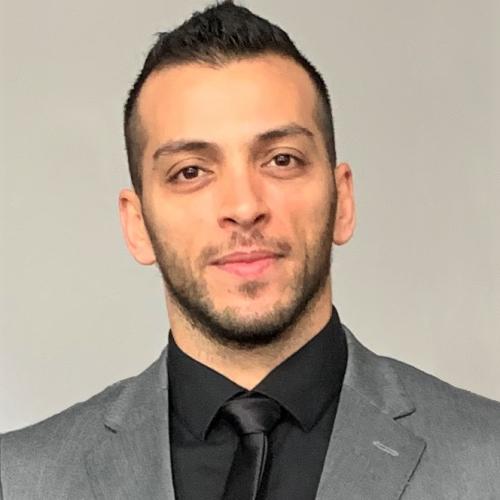
Mazaher Koruzhde, Ph.D., is an Assistant Professor of International Relations at Howard University’s College of Arts & Sciences, where he teaches courses in international political economy, American foreign policy, and security studies. Koruzhde earned his Ph.D. in International Relations from Florida International University in 2022, where his dissertation examined the role of transnational investment blocs in shaping U.S.–Persian Gulf relations and U.S. policy toward Iran. He also holds an M.A. in International Studies from Florida International University and an M.A. in International Relations from the University of Tehran, bringing a broad and comparative perspective to his work in global politics.
Koruzhde’s research explores the intersections of corporate power, security policy, and U.S. foreign affairs, with a particular focus on the political economy of sanctions and geopolitics in the Middle East. He has published peer-reviewed journal articles and book chapters investigating topics such as the transnational investment bloc’s influence on militarization in the Persian Gulf and the implications of shifting U.S. foreign policy frameworks. His scholarship also includes rigorous analyses of how global economic structures shape strategic decision-making and state behavior, contributing to academic debates in international political economy and security studies.
In addition to his academic appointments, Koruzhde is active in the broader scholarly community, presenting his research at major conferences such as the Midwest Political Science Association and the International Studies Association. His work has been supported by fellowships, travel awards, and research grants, reflecting his commitment to advancing understanding of complex global systems through both qualitative and quantitative methodologies. At Howard University, he is deeply engaged in mentoring students and fostering critical inquiry into international relations, preparing the next generation of scholars and practitioners to navigate an increasingly interconnected world.
International Relations
Florida International University
2022
International Relations
Florida International University
2020
International Relations
University of Tehran
2012
Political Science
University of Mazandaran
2009
I focus on the intersection of the global capitalist economy and U.S. foreign policy. I have developed the "transnational investment bloc" framework to analyze U.S. policy in the Persian Gulf. Within this framework, U.S. policy can best be understood as protecting the capitalist interests of a U.S.-Saudi transnational investment bloc that derives steady profit from the military and investment ties between the U.S. and the region.
Read: The Hilltop | Protests Spread Across Iran Amid Economic And Political Unrest
The Transnational Investment Bloc in the U.S. and Persian Gulf
We develop a critical political economy framework to explain U.S. foreign policy toward Saudi Arabia and the Persian Gulf. In doing so, we argue that U.S. policy in the Persian Gulf goes well beyond the geopolitics of “oil for security,” which has been the focus of many scholarly studies.
The Iranian Crisis of the 1970s-1980s and the Formation of the Transnational Investment Bloc
The events surrounding the Iranian Revolution in the 1970s and 198s significantly contributed to the formation and consolidation of a U.S-Saudi transnational investment bloc.
In this paper, we use a case study of the Iran nuclear deal to put this idea to the test. We hypothesize that the hostage crisis generation is less likely to support the Iran nuclear deal than the post-hostage crisis generation. Using data from the 2015 Chicago Council Survey of American Public Opinion and U.S. Foreign Policy, we conduct a formal statistical analysis. The results of our OLS regression analysis show that there is a statistically significant difference between foreign policy attitudes of the two generations, irrespective of partisanship and ideology that are usually considered the main determinants of public opinion on foreign policy.
Book Chapter: The Transnational Investment Bloc in the U.S. and Persian Gulf in Capitalism and Class Power
Capitalism and Class Power examines corporate power through chapters on the U.S. military industrial complex, the rise of billionaire wealth in the U.S., the role of a transnational investment bloc in U.S.–Saudi relations, the rise of global disinformation firms, Canadian imperialism in the English-speaking Caribbean, the power of an EU corporate bloc in Caribbean trade agreements, the relationship between capitalism and poverty in rich capitalist countries, and the relationship between “neoliberalism” and capitalism. Professor Cox concludes the volume with reflections on the importance of corporate power research to achieving systemic change.
The Sanctions Must Go On: The Transnational Investment Bloc Support for the Iran Sanctions
This paper engages with a critical scholarship that enables us to place these developments at the intersection of geopolitics and the global capitalist economy. It contributes to this scholarship by offering a ‘transnational investment bloc’ (TIB) framing of the Iran sanctions that embeds the US-based leading sectors of transnational capital and the military–industrial complex (MIC), with strong ties to the Persian Gulf, within the US foreign policy apparatus.