
Doctor of Philosophy (Ph.D.)
Mass Communication
University of Georgia
2013
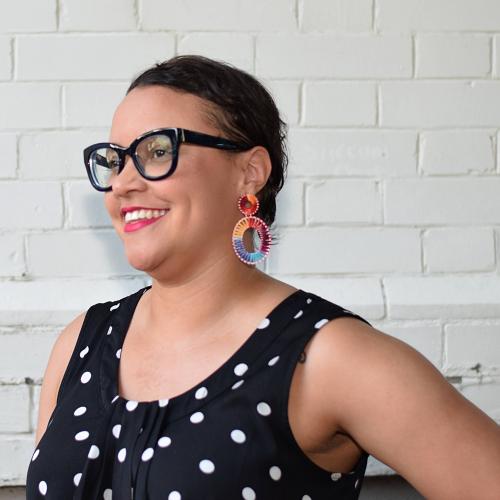
Loren Saxton Coleman, Ph.D. is an associate professor and Director of Graduate Studies in the Department of Communication, Culture, and Media Studies in the School of Communications at Howard University. Coleman is a Black cultural and critical scholar of media studies, and her research critically examines how Black people engage various forms of media practices, including community media, social media, television and the Black press. In some of her recent work, Coleman explores Black resistance and resilience in the D.C. Native movement and its politics of representation. She employs cultural theories to examine the intersections of structures of race, spatiality, and media practices to investigate how Black people practice both racial and spatial justice.
Her work appears in journals, such as Social Media + Society, The Black Scholar, Howard Journal of Communication, and Journal of Intercultural Communication Research. She is the co-author of two recently published books--Mixing: Race, Higher Education, and the Case of Clyde Kennard (Univ. Of Miss. Press) and Media, Industries, Society: Diverse Foundations in Mass Communication (Routledge). Coleman earned her Doctorate in Mass Communication from the University of Georgia. She earned her master's degree from the University of Georgia, and her bachelor's degree from North Carolina State University.
She is a proud native Washingtonian, and currently lives in Northwest, Washington, D.C.
Mass Communication
University of Georgia
2013
Journalism and Mass Communication
University of Georgia
2010
Public Relations
North Carolina State University
2008
Specialty Areas: Media Studies, Critical and Cultural Studies, Critical Pedagogy, Black Studies, Media Representation
Senior Investigator: “Project ReFocus: Racial Ethnic Framing of Community-Informed and Unifying Surveillance,” submitted to CDC Foundation ($1.7 million). (Awarded Sept. 2020)
Grant Evaluator: “Communicating Across Cultures in a Changing City,” submitted to HumanitiesDC Vision ($20,000). Howard University’s Department of Communication, Culture, and Media Studies Department. (Awarded June 2019).
“Measure of Progress: The Clyde Kennard Story,” submitted to Mississippi Humanities Council ($7500). In conjunction with Freedom50 Research Group (Awarded June 2017).
Principal Investigator: “Can we Achieve this Togetherness in Our Time: A Clyde Kennard Lecture Series,” submitted to Mississippi Humanities Council ($1970). In conjunction with Freedom50 Research Group, (Awarded Jan. 2017).
Freedom50 Research Group Grant Proposal ($2000). Submitted to and accepted by The College of Arts and Letters at the University of Southern Mississippi. (Awarded Nov. 2015).
Read: Education Week | From Euphoric Moments to Workplace Dysfunction, Teachers See Themselves in ‘Abbott Elementary’
Read: MLK 50 | What’s Black and read all over?
Read: Penn State University | New book chronicles Black man’s attempt to integrate Mississippi college
Mixing: Race, Higher Education and the Case of Clyde Kennard
This volume draws from periodicals, court documents, and student publications to recover Clyde Kennard’s case from the shadows of history. It emphasizes his efforts to empower African Americans and create lasting social change. Each chapter offers a unique perspective on Kennard’s life and legacy, particularly his influence on the Hattiesburg community and on students at the University of Southern Mississippi. Mixing is both a tribute to Kennard’s enduring fight for justice and a call to continue conversations about race, education, and social equity today.
Media, Industries, Society: Diverse Foundations in Mass Communication
This textbook provides students with a grounding in critical pedagogy and praxis, foundational technologies and their evolution, and the role of the internet and media convergence, as it explores the historical and foundational developments of print, broadcast, and new media. Key areas covered include books, newspapers, magazines, photography, radio, television, film, music, social networks, podcasts, and video games. Each of these chapters includes a comprehensive, historical overview of the medium, as well as a more diverse representation of the key players within each media industry. As such, this book highlights the crucial contributions of historically marginalized racial and ethnic individuals and groups. Each section provides a thematic overview of chapters with key points to consider and concludes with discussion questions, key terms, and points for media literacy application.
The “Beat” of the Black Press: An exploratory analysis of Black newspapers and their podcasts
As newspaper readership trends shifted from paper to online/digital, several Black Press newspapers acquired websites. While this acquisition blurred the lines between ownership and management, the digital Black Press still contains pertinent and relevant content. Like the Black Press, podcasting is conceptualized as a participatory and engaging media process that has proven to be a viable avenue for news consumption, suggesting that it could be integral to the Black Press. This paper takes a constructivist grounded theory approach to investigate how four Black newspapers’ podcasts represent the goals of the Black Press. Our research showed that content across all three podcasts reported on stories that centered Black people, highlighted issues pertinent to Black audiences, and encouraged community action, thus aligning with the goals of the Black Press. While traditional and new media are often put at odds with each other, this study contributes to research on the Black Press by exploring a form of new media to not replace, but rather, to evolve the Black Press itself and find new ways for it to reach and expand its audiences.
“An Opportunity to Reclaim a Place”: A Critical Analysis of Media, Memory, and BLM Plaza DC
Mass media play a critical role in the construction of sites of memory and repositories of collective memory, like Black Lives Matter Plaza in Washington, D.C. Informed by both Stuart Hall (1997) and Henry Lefebvre’s (1991) concepts of representation, this research will explore the role of newspaper, specifically the Black Press, in the representation of Black Lives Matter Plaza DC (BLM Plaza DC) and its formation of BLM Plaza’s collective memory. My analysis conveyed that the Black Press represented BLM Plaza DC, a site of Black expressive culture, as a Black spatial imaginary. The Black Press’ representation of BLM Plaza DC helped construct BLM Plaza DC as a Black memory-making project that decentered the white gaze and recalled the names of Black people from our past and present that have fought for social and racial justice.
Ancestor is king: the role of Afrofuturism in Beyonce’s Black is King
Black is King is a film that follows the plot of Disney’s Lion King through the use of Beyoncé’s Lion King: The Gift album that includes 14 songs that represent scenes in the film. This analysis examines the representation, regulation, and identity of the ancestor in Beyoncé’s Black is King film through the circuit of culture and Afrofuturism to investigate how the ancestor connects to the past, present, and future Black people, our history, and our liberation. Through a textual analysis, the research conveyed that the ancestor was present within three elements in the film and the music that included: (1) the sun, moon, and stars; (2) water; (3) earth. Ultimately, the analysis provides evidence that Afrofuturism is more than an aesthetic. It is a practical lens of research that discusses empowerment, resistance, communication, and imagination within popular culture.
“We’re part of this city, too”: An examination of the politics of representation of #DCNativesDay
This cultural analysis explores how D.C. natives represented themselves on Twitter via #DCNativesDay. The analysis found that Twitter users engaged in hashtag activism to share stories about their connection to place(s) (e.g., movie theaters, neighborhoods, public schools) in the city that were integral in the construction of their individual and collective Black D.C. native identities. Constructed identities were not monolithic, and users engaged in some self-reflexivity. The users’ emphasis on place seemed to signify reclamation of changing city landscapes and legitimacy in the city. Ultimately, this research raises questions about how alternative representations that map marginalized communities onto city spaces in online spaces can create possibilities of transformation for Black communities during gentrification in offline spaces.
“You just can’t trust them”: Exploring the memorable messages Costa Rican natives recall about race in Journal of Intercultural Communication Research, 47(4), (pp. 310-325).
This study uses memorable messages as a framework for understanding how Costa Rican youths are socialized about race. Through semi-structured interviews, twenty-three participants identified a total of 107 memorable messages, of which three themes emerged: (a) denial of racism, (b) preparation for bias, and (c) promotion of mistrust. Findings reveal that participants use memorable messages to make sense of racial hierarchies in Costa Rica while also highlighting patterns of racial socialization that are consistent across global contexts. In addition to examining the individual-structure dialectic, this research addresses post-racial and color-blind narratives that permeate discourses in Latin American nations.
Trending Topics: A cultural analysis of Being Mary Jane and Black women’s engagement on Twitter in The Black Scholar: Journal of Black Studies and Research, 48(1), (pp. 43-55).
Chapter 7: #DCNative: Examining community identity, representation, and resistance in Washington, D.C. in Media, Myth, and Millennials: Critical perspectives on race and culture
Media, Myth, and Millennials: Critical Perspectives on Race and Culture debunks the post-racial myth among millennial media consumers and producers. This theoretically diverse collection of contributors highlights the complexity at the intersections of media, race, gender, sexuality, class and place. Loren Saxton Coleman and Christopher Campbell’s edited collection offers critical and cultural insight on the commodification of millennial audiences and the acts of resistance that emerge from millennial media producers and consumers. Scholars of sociology, media studies, race studies, gender studies, and cultural studies will find this book especially useful.
All is “Wells” With My Soul: Analysis of conditioned agency via The Defender’s coverage of the construction and opening of the Ida B. Wells Homes in Howard Journal of Communication, 30(1), (pp. 1-19).
This critical textual analysis explores how people exercise spatial and communicative agency through media, such as the Chicago Defender, and in social and physical space, such as the Wells Homes. The research suggests that the Defender's coverage of the Wells Homes' construction is an exemplar of how media practices reinforced restricting structures of race, class and space, while simultaneously providing opportunities for residents and community members to collectively produce sites of social resistance and transformation.
This chapter explores critical media literacy pedagogy. Using case study method, the author argues that The Washington Informer's, “Bridge” publication can be used as a practical pedagogical tool to teach students how to analyze and deconstruct media texts, and simultaneously inform students on how to produce alternative, counter-hegemonic media texts. This approach is consistent with literature on critical media literacy that calls for engaged and empowering pedagogy to encourage students to think critically about their roles in creating and maintaining a radical and participatory democracy.
‘Boy Bye’: A textual analysis of Angela Rye and the politics of representation of Black women in cable television news in Leadership Through the Lens: Interrogating Practice, Presentation and Power. (pp. 67-84).
Television informs our perceptions and expectations of leaders and offers a guide to understanding how we, as organizational actors, should communicate, act, and relate. Because of its pervasiveness as a medium and the impact it can have in influencing expectations of leadership and related behavior within organizational life, television can be understood an important pedagogical tool.Leadership through the Lens: Interrogating Production, Presentation, and Poweris an edited collection of 11 chapters that address representations of leadership in scripted and unscripted workplace settings, showcasing the innovative ways in which diverse leadership styles are illustrated in a variety of contexts on television. With a unique approach at the intersection of leadership and mass media studies, this book shows how the two disciplines coexist to inform how leadership culture is produced and transformed via presentation and representations on television.