
Master of Education (Ed.M.)
Leadership
Harvard University Graduate School of Education
expected graduation: May 2027
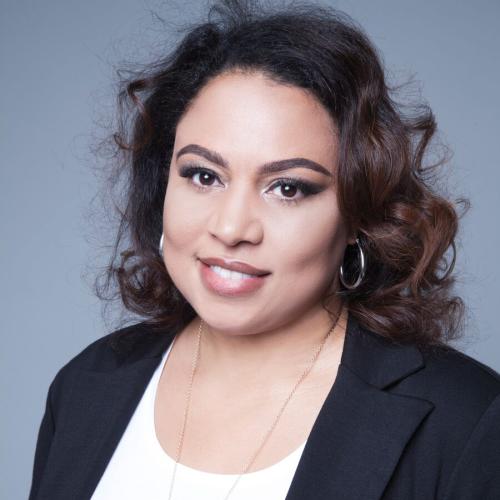
Ayanna Cooper, Ed.D., is an instructor at the Howard University School of Education. She is an educator, bestselling author, storyteller, and keynote speaker whose passion for advocacy centers around primary and secondary linguistically diverse student populations. As a technical assistance provider, she supports leadership teams across various state departments of education and nonprofit organizations.
Cooper, a former TESOL International Association board member, serves as an advisory committee member for the Content Center English Language Proficiency Network, and as an advisory member for the National Association of English Learner Program Administrators (NAELPA). She is a U.S. Department of State English Language Specialist alumna, having served on two projects, one with the Kuwait Ministry of Education and the other in Brazil. In addition to consulting, Cooper stays close to classrooms by teaching pre-service teacher candidates at Howard University and has served as a TF at Harvard Graduate School of Education. As a visiting faculty member at Loyola Marymount University Center for Equity for English Learners (CEEL) she served as co-principal investigator for the Young, Bilingual, and Black in California policy brief. She is the author of several publications including And Justice for ELs: A Leader’s Guide to Creating and Sustaining Equitable Schools, Black Immigrants in the United States; Essays on the Politics of Race, Language and Voice (co-edited), multiple book chapters, and as the founding editor of Language Magazine’s Pass the Mic series.
As a committed knowledge seeker, Cooper earned a bachelor’s degree in sociology from University of Massachusetts Boston, master’s degrees in education from Lesley University, Providence University College & Theological Seminary, and from Harvard Graduate School of Education, a specialist degree from Piedmont University, and a doctorate degree from Walden University.
Leadership
Harvard University Graduate School of Education
expected graduation: May 2027
Teacher Leadership
Walden University
2009
Curriculum & Instruction
Piedmont College
2004
Elementary Education
Lesley University Education
1998
Sociology
University of Massachusetts at Boston
1996
Chapter 9: Still We Rise: Collaborative Autoethnographic Perspectives from Black Women in English Language Teaching and Leadership in Female Leadership Identity in English Language Teaching (pp.153-176)
Through Collaborative Autoethnographies (CAE), this chapter addresses the questions of the ways in which five Black women in ELT have navigated successful careers as professionals and leaders, and the types of barriers Black women have faced in the profession. Five themes emerge from the data analysis of the autoethnographies: (a) racialized identities (b) teachers’ low expectations, (c) limited opportunities, (d) becoming and being perceived as credible educators, and (e) the importance of mentorship. These themes are validated by the tenets of Critical Race Theory in that they are steeped in the authors’ U.S. based racialized experiences as Black women. The chapter also explores leadership identity development as related to the authors’ intersectional racialized identities as Black women leaders. The authors acknowledge and affirm the need to include Black women as ELT leaders. They have at times taught and advocated for the most racially and linguistically marginalized students, while at the same time experiencing various forms of marginalization. Many of the experiences and much of the self-image of the authors are reflected in the themes that permeate the poem Still I Rise, by the renowned poet, Maya Angelou, which is quoted in the chapter.
The Illusion of Inclusion: Blackness in ELT in California TESOL Journal, v33 n1
The field of TESOL has experienced a renewed interest in the role of race in language teaching and learning within the context of the recent “racial reckoning” in the US. As a result, the field has seen a plethora of DEI position statements, initiatives, and publications on race, racism, and anti-racism over the past two years. However, the persistence of linguistic, racial, and cultural hegemony, bias, discrimination, linguicism, and marginalization leads us to ask whether inclusion is an illusion. In answering this question, we describe the effects of this illusion in two areas: ELT curriculum and materials (Grant & Wong, 2008) and faculty hiring practices (Romney, 2010). With critical race theory and raciolinguistics as frameworks, we discuss the policies and practices that continue to marginalize Black TESOL professionals and disadvantage Black pre-service teachers and English learners. We conclude the essay with recommendations for effective DEI and actionable allyship.
Chapter 2: Revolisyon an ap Kontinye: Honoring Haitian Creole Through a Dual Language Program in Boston Public Schools in Critical Consciousness in Dual Language Bilingual Education Case Studies on Policy and Practice (1st ed., pp. 30–38)
Founded in 2017, the Toussaint L’Ouverture Academy, located within the Mattahunt Elementary School, serves early elementary students in Boston, Massachusetts. The academy is one of the first public schools in the nation to offer a dual language English/Haitian Creole program. This program was developed in direct response to immigrant parents and community members predominantly of Haitian descent sharing a vision for language and cultural preservation. A scholastic revolution was established with the program’s commitment to assuring that students develop as bilingual and biliterate individuals. This chapter examines how stakeholders have kept the revolution going by examining how their leadership practices and professional learning efforts are aligned to supporting academic success for students while adhering to state and federal civil rights mandates. These practices require critically conscious stakeholders who are strategic and collaborative in their efforts to create and sustain a learning environment wherein students’ academic achievement is partnered with cultural heritage and native language. Recommendations and guiding questions are provided with the purpose of supporting current and future dual language programs, especially those serving in urban communities that include less commonly taught partner languages.
Chapter 3: Supporting English Learners in Your School: Essential Practices for Ensuring Linguistic Equity in Re-Envisioning Education Affirming Diversity and Advancing Social Justice (p. 33–56)
The number of students identified as English learners (ELs) in the United States has risen in the last two decades and continues to grow. Approximately 10% of K–12 students are identified as ELs. Students who are identified as ELs come from diverse ethnic groups with diverse home languages, socioeconomic statuses, backgrounds, and experiences. Improving outcomes for ELs will require embedding linguistic equity practices into school leadership preparation programs because school leaders, both current and future, must be aware of and responsive to the diverse EL populations within their schools. Callahan et al. (2019) affirm, “To effectively address the linguistic civil rights of EL students and other bilinguals, we argue that school leadership programs must cultivate linguistic as well as ethnic awareness, if not capacity” (p. 282).
Black Immigrants in the United States; Essays on the Politics of Race, Language, and Voice
In the United States, ‘immigrant’ is a complicated category. It is used interchangeably with ‘refugee’ and it is, most of the time, linked to South America, especially Latina/os. Black Immigrants in the United States is arguing that immigrants are not refugees and, whether coming from the Caribbean, Latin America or Africa, Black immigrants are oft-silenced in immigration studies and unsystematically researched. Being one of the first books on the topic in the United States, Black Immigrants in the United States is a crack, a verse in the syntax which links Blackness and immigration; a required reading for anyone who is interested in immigration generally and Black immigration in particular. For example, did you know that 12-13% of the statistically defined as African Americans are ‘Black immigrants’ (both immigrants and refugees) (Ogunipe, 2011)? Out of this 12-13%, did you know the first and second-generation constitute 41% of Black first-year students in Ivy League? Black Immigrants in the United States is an attempt to answer these questions and paint a picture for this population, where they come from, what languages and histories they bring with them to the United States, and discusses their challenges as well as their triumphs. With this book, as children of migration ourselves, we are turning researching and writing about Black immigrants into acts of love and reading about them into an expression of jouissance.
And Justice for ELs: A Leader’s Guide to Creating and Sustaining Equitable Schools
And Justice for ELs is a resource every school leader must read right away―for that matter, keep within arm’s reach because you’re certain to refer to it constantly. Ayanna Cooper, a former U.S. Department of State English Language Specialist, has "been there, done that" and is now prepared to share with you how best to translate today’s federal mandates into actionable steps for ensuring the civil rights of our nation’s multilingual learners.
Because it is impossible to provide specific advice or guidance for every possible situation, Ayanna focuses on the "need-to knows" for making informed decisions within your own building:
But what you’ll love most is the way Ayanna "keeps it real." Every chapter is framed around a "What Would You Do?" scenario, for which she ultimately provides an answer(s) as well as guiding questions to help you think through the issues. Take a look for yourself. We know you’ll agree that And Justice for ELs is without question a one-of-a-kind resource.