Doctor of Philosophy (Ph.D.)
Philosophy
University of Memphis
2004
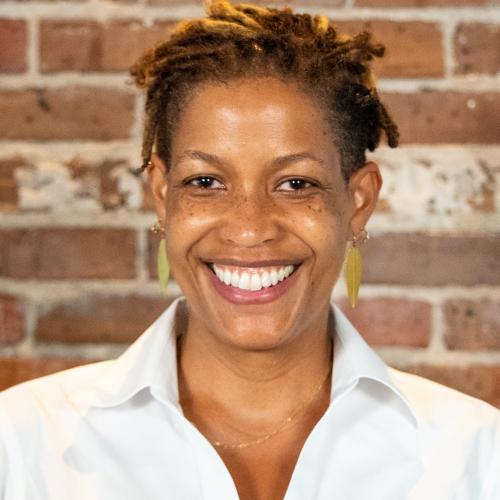
Anika Simpson, Ph.D. is a professor of philosophy and chair of the Department of Philosophy at Howard University. She is also founding director of Black Queer Everything, an initiative funded by the Mellon Foundation that invests in the next generation of scholars, activists, and artists working toward Black liberation. Simpson has dedicated the majority of her career to teaching at Historically Black Universities, where she has invested in the work of institution building.
Simpson’s forthcoming book Single Black Mother: Queer Reflections on Marriage and Racial Justice (Oxford University Press, 2025) deploys a queer Black feminist lens to illuminate the multiple vectors of harm, inclusive of material, moral, and political harms, that serve to undermine the freedom of unmarried Black mothers. This organizing focus encapsulates Simpson’s research interests in Black feminist philosophy, queer theory, and the philosophy of gender, race, and sexuality.
A graduate of Spelman College, Simpson is deeply committed to supporting and advancing racial justice, gender justice, and LGBTQ+ equity through advocacy and education. Simpson’s work is an expression of her firm commitment to making a difference in the lives of her students and institutions that are devoted to communities of color.
Philosophy
University of Memphis
2004
Philosophy
University of Memphis
2001
Philosophy
Spelman College
1995
Elementary Education
The Ohio State University
1996
Specialty Area: Continental Philosophy
Principal Investigator: $500,000. Andrew W. Mellon Foundation, “Black Queer Everything.” Black Queer Everything invests in the development of burgeoning LGBTQ+ scholar-activists through interdisciplinary, humanities-focused learning opportunities that engage renowned faculty, community activists, and scholar-activists.
Single Black Mother: Queer Reflections on Marriage and Racial Justice
Marital Shade: Studies in Intersectional Invisibility
As legal scholar Ariela Dubler notes, the institution of marriage casts a long shadow across contemporary social life. Much more than a way of conferring social sanction on sexual and romantic relationships, marriage unlocks a wide range of social goods, from inheritance rights to medical records access. In addition, though, and as generations of feminists, queer activists, and others have made clear, this institution is part of a wider network of power relationships that it helps to shore up and conceal. Critics most often point to the way the marital regime quietly reinforces patriarchal, bourgeois liberal, and heteronormative assumptions, hiding them in the shadow of putatively benign, private, and natural social structures. This article brings the overlooked connections between marriage and race out of the shadows and more fully into view. Using and refining a fourfold notion of racial invisibility developed in Taylor’s Black Is Beautiful, we consider two respects in which this ocularcentric metaphor for racialized epistemic short-circuiting is particularly appropriate for discussing the marital regime.
Black Philosophy and the Erotic
In the following, I will examine briefly several arguments pertaining to marriage in an effort to illustrate possible threads of philosophical inquiry into black eros, espe- cially within black feminist philosophy.
Race and Feminist Standpoint Theory in Convergences: Black Feminism and Continental Philosophy (pp. 105-120).
The notable split among African American and white women during the democratic presidential primary highlights the need to reexamine the role of intersectionality, or interlocking forms of oppression, within feminist standpoint theory. In the following, I aim to show through revisiting the notion of intersectionality in relation to group formation that feminist standpoint theory may be better suited to describe the social situation of Black women as a group as opposed to all women. Through an examination of Patricia Hill Collins’ critique of contemporary interpretations of intersectionality and Jean-Paul Sartre’s ontological account of group formation, I will show the difficulties of developing a cohesive standpoint among women as a whole.