
Postdoctoral Fellow
Research Center for Group Dynamics
University of Michigan
1999-2001
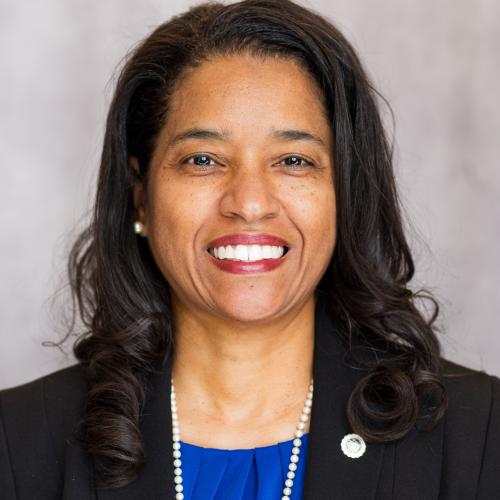
Angela P. Cole Dixon, Ph.D. is associate provost for academic affairs and professor of psychology at Howard University. A proud Howard University and Stanford University alumna, Dixon graduated from Howard with a Bachelor of Science in Psychology (magna cum laude) and a minor in Mathematics in 1994 and from Stanford with a Ph.D. in Cognitive Psychology in 1999.
Dixon joined the Howard University Department of Psychology faculty in 2001 and chaired the department from 2014-2017. Prior to joining Howard's faculty, she completed a postdoctoral fellowship at the University of Michigan (1999-2001) within the Research Center for Group Dynamics of the Institute for Social Research (ISR). Also, while at ISR, she was a postdoctoral affiliate in the National Institute of Mental Health (NIMH)-sponsored Psychosocial Factors in Mental Health and Mental Illness program and participated in the Inter-University Consortium for Political and Social Research (ICPSR) Summer Program in Quantitative Methods of Social Research.
The focus of Dixon's research is on social, personality, and cognitive factors that influence decision-making--especially in the face of events that threaten our security, remind us of our mortality, call into question our psychological significance, and diminish our humanity. Examples include manmade and natural disaster, pandemics, societal unrest, political violence, racial injustice and oppression. This research draw insights from terror management theorists, belief system theorists, research on social representations, social judgments, social identity, and the psychological significance of race within racialized societies. Dixon and her colleagues examine how we draw upon psychological resources to protect ourselves; how differences in perceptions, memories, interpretations of and attributions about issues and events influence our decisions; how we receive and respond to threatening information; and how the values and identities that are most salient and important to us influence our responses.
In her role as associate provost, Dixon is responsible for guiding academic planning, program review and development efforts; ongoing review and development of academic policy and administrative procedures, with specific emphasis in academic and student affairs; and providing direction and guidance in faculty affairs.
Research Center for Group Dynamics
University of Michigan
1999-2001
Cognitive Psychology
Stanford University
1999
Psychology
Howard University
1994
Statistics I
Statistics II
Research Methods
Research Methods in Social Psychology
Decision Making Seminar
Attitudes and Social Cognition
Graduate Research: Technical Writing
Research Design & Analysis
Statistics I
Statistics II
Research Methods and Statistics I
Research Methods and Statistics I
Experimental Psychology
Social Psychology
Sophomore Honors Seminar
Junior Honors Seminar
Senior Honors Seminar
Junior Research
Senior Research
Principal Investigator from 2014-2016; Co-Principal Investigator from 2008-2014: 2008-2016 – National Science Foundation (Grant # SES-0750683). “SBES Alliance Collaborative Research: Atlantic Coast Social, Behavioral, and Economic Sciences”
Co-Principal Investigator: 2005-2007 – National Science Foundation (Grant # SBE-0555092). “SBE Collaborative Program: Atlantic Coast Social, Behavioral and Economic Sciences Alliance”
Principal Investigator: 2004-2006 – National Science Foundation (Grant # SES-0422544). “The Impact of Terrorism on Perceptions of Justice and Decision-Making”
"Good Trouble": Nonviolent Activism and the Quest for Psychological Significance in a Racialized Society. in The Routledge International Handbook of Human Significance and Mattering.
Literature is reviewed to elucidate conditions under which individuals heed John Lewis’s call for “good trouble”: responding nonviolently to significance affronts in America, a racialized society. Our review suggests consideration of the following is critical: the relative importance, meaning and centrality of salient beliefs and social identities when the significance quest is activated; ideological alignment across salient identities and with significance restoral means; and where individuals fall in the life course. We note this process is even more complicated in a racialized society. We conclude, however, individuals draw on psychological resources to cope, protect themselves from racialized significance assaults, and flourish, as they narratively process information and engage in active meaning-making.
Examining Value Content, Structure, and Prioritization in African-American and Caribbean Student Samples in the United States in Caribbean Journal of Psychology, 10, 42-65.
Schwartz’s value theory is arguably the most cross-culturally validated value theory in psychology (1992, 1994a, 2011). United States (US) studies have garnered much support for Schwartz’s theory (Schwartz, 1992, 1994a; Schwartz & Sagiv, 1995). However, US samples were neither racially nor ethnically representative, and did not examine intranational cultural differences in value meaning (i.e., content), relations (i.e., structure), and the relative importance of values as life-guiding principles (i.e., prioritization). The present study aims to examine intranational cultural differences in values by examining value content, structure, and prioritization in two understudied cultural groups within the US: African-American students (n = 1022) and Caribbean students (n = 86) (N = 1108). Multidimensional scaling analysis produced a solution that was highly interpretable and consistent with the theory: all 10 predicted values emerged; and observed spatial relations among values were as hypothesized, with few exceptions. With respect to value prioritization, the top three values were the same for both groups. In the African-American sample, the top value was achievement; however, in the Caribbean student sample, the top value was benevolence. These analyses helped to identify meaningful cultural differences in the values of African-American and Caribbean student samples in the US.
Examining the Influence of Measures of Adiposity on Cognitive Function in Middle Age and Older African Americans in Archives of Clinical Neuropsychology, 31, 23-28.
The objectives of the study were to examine whether measures of total obesity (body mass index [BMI]) and central obesity (waist circumference [WC] and waist-to-hip ratio [WHR]) are associated with cognitive function in African Americans, and whether sex moderates these associations. A sample of 194 African Americans, with a mean age of 58.97 years, completed a battery of cognitive tests and a self-reported health questionnaire. Height, weight, waist and hip circumference, and blood pressure were assessed. Linear regression analyses were run. Results suggested lower performance on measures of verbal fluency and complex attention/cognitive flexibility was accounted for by higher levels of central adiposity. Among men, higher WHR was more strongly related to complex attention/cognitive flexibility performance, but for women, WC was a salient predictor. Higher BMI was associated with poorer verbal memory performance among men, but poorer nonverbal memory performance among women. Findings suggest a need for healthy lifestyle interventions for African Americans to maintain healthy weight and cognitive function.
Understanding African-American College Students' H1N1 Vaccination Decisions in Health Psychology, 34, 1185-1190.
In this study, we examined the effects of cognitive appraisals and individual differences in discomfort with uncertainty, as measured by a short form of Webster and Kruglanski’s (1994) Need for Closure (NFC) scale, on African American college students’ self-reported H1N1 vaccination decisions during the 2009–2010 H1N1 pandemic. Howard University undergraduates, who self-identified as Black or African American and met U.S. Department of Health and Human Services, Centers for Disease Control and Prevention (CDC) H1N1 high-priority group criteria, completed computer-administered surveys that included (a) questions about H1N1 vaccination status; self-efficacy; perceived costs, benefits, and efficaciousness of the H1N1 vaccine; and potential barriers to vaccination, including flu-shot frequency; (b) demographic measures; and (c) a short form of Kruglanski’s NFC scale (Orehek et al., 2010). A sequential multinomial logistic regression revealed (a) a significant effect of NFC on vaccination status such that higher NFC was associated with lower odds of being vaccinated or intending to be vaccinated, after controlling for demographic variables, comfort with flu vaccinations more generally, and several other potential vaccination barriers, χ2(2, 217) = 10.08, p = .006; and (b) vaccination status was best accounted for by a model that included perceptions of the vaccine’s costs, benefits, and efficaciousness, and participants’ self-efficacy for being vaccinated, χ2(6, 217) = 57.24, p < .001. Our data suggest the importance of cognitive appraisals and traits (i.e., comfort with uncertainty) in the process individuals use to make potentially life-saving vaccination decisions.
Dispositional Depression and Hostility are Associated with Inflammatory Markers of Cardiovascular Disease in African Americans. in Brain, Behavior and Immunity, 28, 72-82.
Prior research has demonstrated that state depressive symptoms and hostility can modulate inflammatory immune responses and directly contribute to cardiovascular disease (CVD) onset and development. Previous studies have not considered the contribution of dispositional depressive symptoms to the inflammatory process. They have also largely excluded African Americans, despite their disproportionate risk for CVD. The first aim of the study was to examine the impact of state and dispositional depression and hostility on CVD-associated inflammatory biomarkers interleukin-6 (IL-6) and C-reactive protein (CRP) in an African American sample. The second aim was to examine synergistic influences of hostility and state and dispositional depression on IL-6 and CRP. The final aim was to examine whether the relations between state and dispositional depression, hostility, IL-6, and CRP varied as a function of gender and education. Anthropometric measures, blood serum samples, and psychosocial data were collected from 198 African Americans from the Washington, DC metropolitan area. Hierarchical and stepwise regression analyses indicated that (1) increased levels of hostility were associated with increased levels of CRP; (2) hostility and IL-6 were more strongly associated among participants with lower educational attainment; and (3) dispositional depression and CRP were more strongly associated among participants with greater hostility and lower educational attainment. Findings suggest that enduring personality dispositions, such as dispositional depression and hostility, are critical to a thorough assessment of cardiovascular profiles in African Americans. Future studies should investigate causal pathways that link depressive and hostile personality styles to inflammatory activity for African American men and women.
Need for Closure and the Social Response to Terrorism in Basic and Applied Social Psychology, 32(4), 279–290.
It has been long contended that terrorism is a form of psychological warfare with the aim of advancing political objectives through the spreading of fear. The present set of five studies explored the relation between need for closure and the social response to terrorism. We found support for the notion that reminders of terrorist attacks elevate the need for closure and that the need for closure may enhance ingroup identification; interdependence with others; outgroup derogation; and support for tough and decisive counterterrorism policies and for leaders likely to carry out such policies. The implications of this research for the claims of terrorist ideologues regarding the efficacy of terrorism are discussed.
Making sense of a hurricane: Social identity and attribution explanations of race-related differences in Katrina disaster responses in Racing the Storm: Racial Implications and Lessons Learned from Hurricane Katrina
The aim of this chapter was to assess the adequacy of social identity and attribution theory explanations for divergent reactions and perceptions of Whites and African Americans to the Katrina aftermath, including attitudes regarding the government’s responsiveness and the appropriateness of the residents’ behavior. The chapter described the results of a study, which included diverse (varying in race, ethnicity, and SES) samples of students from Howard University and the University of Maryland and was designed to examine systematically the effects of race-related variables on attributions about the decisions that were made before, during, and after this natural disaster. On the whole, participants in our study were highly critical of the federal government, very sympathetic with Katrina victims, and somewhat sympathetic with local authorities. However, there were significant, but small, race-related differences in participants’ judgments about these groups. We found that a combination of social identity theory and attribution theory variables best accounted for these group differences, but attribution variables tended to be the most important determinants of these judgments.
The findings of this chapter are significant in light of the imminent risk of future natural and man-made disasters. They add to our understanding of the complexities associated with attributions of fault and responsibility and have the potential to inform national disaster planning, mitigation, preparation, response, and recovery efforts. They provide insights on how race-related variables influence individuals’ attributions of responsibility and fault in the event of disasters, and additionally provide policy makers with insights on how to better intervene in other natural and man-made disasters.
Group differences in fairness and decision making in voting rights cases in Law and Human Behavior, 30(5), 543–560.
Participants recruited from one Historically Black University (HBU) and two predominantly White higher-education institutions evaluated and decided simulated voting rights case summaries in which the plaintiff was either a racially-defined (African American) or a nonracially-defined (farmers) minority group. Contrary to social identity and social justice findings of an in-group bias, the present study snowed greater support at all institutions for the voting rights of the African Americans than for the rural farmers, and the greatest support for both minority groups was found at the HBU. Perceived evidence strength was a better predictor of decisions than perceived unfairness, and both of these predictor variables completely mediated the effects of institution-type and involvement of a racially-defined group on decisions.
Reconciling race, self-interest and fairness: The dilemma inherent in American democracy in African American Research Perspectives, 6, 86-97.
From consideration of the historical context in which democracy developed in America, it is clear that a discussion of the history of race relations is vital to our understanding of what is meant by representative fairness. Democracy is not a concept occurring in the abstract. Neither is race simply another person category, like religious affiliation or age. Rather, race, self-interest, and group interest powerfully impact our constructions or social representations1 of what is just and democratic. Therefore the relationship among these variables must be addressed in any complete discussion of democracy and fairness in this country.
Cole-Dixon, A.P., Glymph-Austin, A.D., Gill, J.M., Shivers-Williams, C.A., & Roberts, D.D. (2019). Fairness as a Determinant of the Jigsaw Procedure’s Success in Teaching Undergraduate Psychological Statistics. International Research in Higher Education, 4(1), 9-23. http://dx.doi.org/10.1037/e601232013-001
Cole, A.P., & Glymph, A.D. (2009). Basic Statistics and Research Methods Laboratory Manual. Dubuque, IA: Kendall Hunt
Cole, A.P., & Glymph, A.D. (2009). Research Methods and Statistics for the Social Sciences: A Laboratory Manual. (Second Edition). Dubuque, IA: Kendall Hunt
Cole, A.P., & Glymph, A.D. (2006). Research Methods and Statistics for the Social Sciences: A Laboratory Manual. Dubuque, IA: Kendall Hunt
Saddler, B.S. & Cole, A.P. (2008). Social-Psychological Analysis of Students’ Reactions to a University Housing Crisis. Proceedings of the 2008 Annual Meeting of the International Academy of Linguistics, Behavioral, and Social Sciences: Volume 20
Cole, A.P., Glymph, A.D., & Saddler, B.L. (2006). Terror management and social justice effects on evaluations of campus security policies. Proceedings of the 2006 Annual Meeting of the International Academy of Linguistics, Behavioral, and Social Sciences: Volume 17
Eris, O., Chen, H., Bailey, T., Engerman, K., Loshbaugh, H.G., Griffin, A., Lichtenstein, G., & Cole, A. (2005). Development of the Persistence in Engineering (PIE) survey instrument. Proceedings of the American Society for Engineering Education. http://dx.doi.org/10.18260/1-2--14750
Shivers-Williams, C.A., Cole Dixon, A.P., & Adams, T. (2019, January). A Psychological Analysis of Self-Protective Decision-Making during Natural Hazards. Oral presentation at the 99th American Meteorological Society Annual Meeting, Phoenix, AZ
Shivers-Williams, C.A., Cole Dixon, A.P., & Adams, T. (2018, January). Why Don’t They Leave? Examining Barriers that Prevent Protective Actions During Severe Weather Events. Oral presentation at the 98th American Meteorological Society Annual Meeting, Austin, TX
Shivers, C.A., & Cole Dixon, A.P. (2017, April). A Qualitative Examination of Barriers that Prevent Protective Actions during Severe Weather Events. Oral presentation at the Western Psychological Association 97th Annual Convention, Sacramento, CA
Cole, A.P., Bonner, F.B., & Bedeau, K. (2015, September). Engagement of Minority Serving Institutions for Greater Inclusion in the Social, Behavioral and Economic Sciences. Poster presentation at the World Social Sciences Forum. Durbin, South Africa
Cole, A.P., Shivers, C.A., Gill, J.M., & Allen, L.C. (2015, August). The Roles of Cognitive and Affective Appraisals in H1N1 Vaccination Decisions. Poster presentation at the American Psychological Association Annual Convention, Toronto, Canada
Gill, J.M., Cole, A.P., Allen, L.C., Shivers, C.A., Fletcher, K.D., & Mwendwa, D.T. (2014, December). African-American Students’ H1N1 Vaccination Decisions. Poster presentation at the Minority Health and Health Disparities Grantees’ Conference, National Harbor, MD
Allen, L.C., Gill, J.M., & Cole, A.P. (Feb 13 - Feb 15, 2014). An examination of values and right-wing authoritarianism in an African-American student sample [Conference session abstract]. 15th Annual Meeting of the Society for Personality and Social Psychology, Austin, Texas. https://doi.org/10.1037/e512142015-999
Gill, J.M., & Cole, A.P. (Feb 13 - Feb 15, 2014). Value content and structure in an African-American student sample [Conference session abstract]. 15th Annual Meeting of the Society for Personality and Social Psychology, Austin, Texas. https://doi.org/10.1037/e514472015-399
Gill, J.M., Shivers, C.A., Mwendwa, D.T., Cole, O.J., & Cole, A.P. (2013, August). Examination of Value Content, Structure, and Priorities in an African American Student Sample [Conference session abstract]. APA 121st Annual Convention, Honolulu, Hawai'i. https://doi.org/10.1037/e613322013-001
Shivers, C.A., Gill, J.M., Bruce, A.W., Mwendwa, D.T., & Cole, A.P. (2013, August). Examining the Effectiveness of a Collaborative Psychological Statistics Competition: The Quiz Bowl [Conference session abstract]. APA 121st Annual Convention, Honolulu, Hawai'i. https://doi.org/10.1037/e601232013-001
Shivers, C.A., Gill, J.M., Cole, A.P., Mwendwa, D.T., Levy, S.T., & Scott, M.M. (2013, August). Psychological Analysis of H1N1 Vaccination Decisions [Conference session abstract]. APA 121st Annual Convention, Honolulu, Hawai'i. https://doi.org/10.1037/e582162013-001
Gill, J., Allen, L., Shivers, C., Mwendwa, D., Cole, O.J., & Cole, A.P. (2013, May). An Examination of Values and Right-Wing Authoritarianism in an African-American Student Sample. Poster presentation at the Association for Psychological Science Annual Convention, Washington, DC.
Shivers, C., Gill, J., Bruce, A., Mwendwa, D., & Cole, A. (2013, May). The Quiz Bowl: An Innovative Psychological Statistics and Research Methods Pedagogical Approach. Poster presentation at the Association for Psychological Science Annual Convention, Washington, DC.
Saddler, B.L. & Cole, A.P. (2008, November). Social-Psychological Analysis of Students’ Reactions to a University Housing Crisis. Oral presentation at the Annual Meeting of the International Academy of Linguistics, Behavioral, and Social Sciences.
Glymph, A.D., & Cole, A.P. (2008, May). A Qualitative Examination of Differences in Interpretations of Evidence in Cross-Racial Disputes. Poster presentation at the Association for Psychological Science (APS) Annual Convention. Chicago, IL.
Cole, A.P., Glymph, A.D., & Saddler, B.L. (2008, April). A Social Justice and Terror Management Analysis of Students’ Reactions to Campus Security Threats. Poster presentation at the Psychology and Social Justice Conference, The New School for Social Research, New York, NY.
Cole, A.P., Adams-Fuller, T., Cole, O.J., Kruglanski, A.W., & Glymph, A.D. (2007, August). Explaining Race Differences in Onlookers' Reactions to the Katrina Aftermath [Conference session abstract]. APA 115th Annual Convention, San Francisco, California. https://doi.org/10.1037/e694182007-001
Cole, A.P., Saddler, B.L., & Glymph, A.D. (2007, August). Mortality and Security Salience Effects on Campus Security Policy Reactions [Conference session abstract]. APA 115th Annual Convention, San Francisco, California. https://doi.org/10.1037/e692232007-001
Saddler, B.L., Cole, A.P., Kruglanski, A.W., Jackson, T.A., Orehek, E., Fishman, S., & Chen, X. (2007, August). Gender and Emotion Effects on Manmade and Natural-Disaster Reactions [Conference session abstract]. APA 115th Annual Convention, San Francisco, California. https://doi.org/10.1037/e693912007-001
Cole, A.P., Glymph, A.D., Saddler, B.L., Adams-Fuller, T.M., Cole, O.J., & Kruglanski, A.W.
(2007, May). Memories, Attributions, and Confidence in Authorities Following the Hurricane Katrina Disaster. Poster presentation at the Association for Psychological Science (APS) Annual Convention, Washington, DC.
Glymph, A.D., & Cole, A.P. (2006, August). Examination of Fairness' Role in the Jigsaw Classroom [Conference session abstract]. American Psychological Association 114th Annual Convention; August 10-13. https://doi.org/10.1037/e516622007-001
Saddler, B.L., & Cole, A.P. (2006, August). Psychological Analysis of Students' Reactions to a Housing Shortage [Conference session abstract]. American Psychological Association 114th Annual Convention; August 10-13. https://doi.org/10.1037/e519432007-001
Cole, A.P., Glymph, A. D., Saddler, B.L., Jones, K.S., Lyons, A., & Jackson, T. (2006, May). Terror management and social justice effects on campus security policy decisions. Poster presentation at the Annual Convention of the Association for Psychological Science, New York, NY.
Glymph, A.D., Cole, A.P., Brown, C., & Cage, B. (2006, May). An examination of fairness’s role in the jigsaw classroom. Poster presentation at the Annual Convention of the Association for Psychological Science, New York, NY.
Orehek, E., Fishman, S., Kruglanski, A., Cole, A.P., Saddler, B.L., Chen, X., & Jackson, T. A. (2006, May). The relationship between need for closure and support for decisive leadership, nationalist attitudes, and optimism about safety when threatened by terrorism. Poster presentation at the Annual Convention of the Association for Psychological Science, New York, NY.
Saddler, B.L., Cole, A.P., Kruglanski, A., Jackson, T. A., Orehek, E., Fishman, S., & Chen, X. (2006, May). Emotion, gender, risk, and policy support following the London Transit Bombings. Poster presentation at the Annual Convention of the Association for Psychological Science, New York, NY.
Glymph, A.D., & Cole, A.P. (2005, May). A further examination of the jigsaw strategy’s effectiveness: A case study. Poster presentation at the Annual Convention of the American Psychological Society, Los Angeles, CA.
Saddler, B.L., & Cole, A.P. (2005, May). A psychological analysis of students’ reactions to a housing shortage. Poster presentation at the Annual Convention of the American Psychological Society, Los Angeles, CA.
Cole, A.P., & Thomas, E.A.C. (2003, May). A psychological analysis of the controversy over electoral fairness and preferences. Poster presentation at the Annual Convention of the American Psychological Society, Atlanta, GA.
Cole, A.P. (2000, August). Fairness and preference in voting rights cases. Oral presentation at the Annual Convention of the American Psychological Association, Washington, DC.