Doctor of Philosophy (Ph.D.)
Medical Sociology and Social Inequality
Howard University
2023

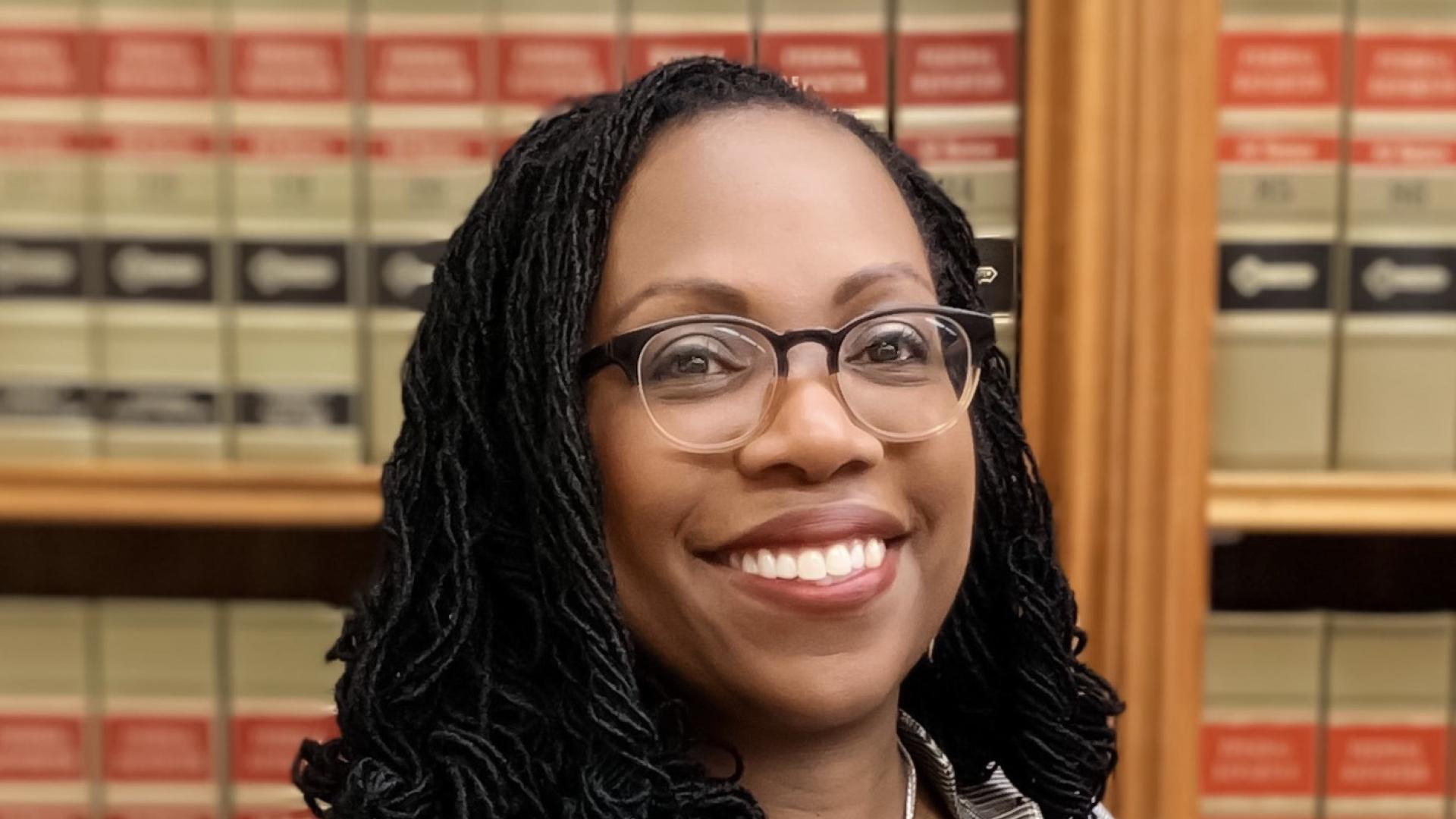
Yanick Rice Lamb, Ph.D. is a tenured professor in the Department of Media, Journalism and Film in the Cathy Hughes School of Communications. Her mission is to give voice to the voiceless and share the gift of knowledge through the written word. An award-winning journalist, author and speaker, Rice Lamb shares her expertise at Howard University, where she is a professor and former chair of the Department of Media, Journalism and Film. She teaches reporting, editing, fact-checking, health and science writing, and media entrepreneurship. She is also adviser to 101 Magazine, TruthBeTold.news, Cover 2 Cover and the Howard University News Service.
Her research focuses on environmental health and climate change as well as journalistic issues, including education, social media and technology, media management and diversity. It has been featured in publications such as Journalism and Mass Communication Educator, the Howard Journal of Communications, Journal of Magazine and New Media Research and Asia-Pacific Media Educator. Her dissertation is titled Toxic Tires: The Sociological Impact of Exposure to Rubber Chemicals on the Autoimmune Health of African Americans in Akron, Ohio.
Rice Lamb is also co-founder of the health website FierceforBlackWomen.com. Previously, she was editor-in-chief of Heart & Soul and BET Weekend, where her editorial vision led to the magazine becoming the second-largest publication for African Americans. Under her leadership, the magazine’s circulation increased nearly 40 percent, from 800,000 to 1.3 million in three years.
She spent a decade at the New York Times Company in various editing roles at the newspaper and at Child magazine. She has also worked at the Atlanta Journal-Constitution, the Toledo Blade, Essence and Emerge.
The Center for Public Integrity and Belt Magazine co-published her award-winning series, “Unintended Consequences: The Rubber Industry’s Toxic Legacy in Akron,” with support from the Fund for Investigative Journalism. The series won a Vernon Jarrett Medal for Journalistic Excellence from Morgan State University. It was praised by judges as “an exemplary piece of research about deindustrialization and its impact on a marginalized community.”
“The storytelling is compelling and comprehensive, engaging the reader all along the investigative road."
Describing the series as “powerful and effective,” the National Press Foundation named Rice Lamb as co-winner of the Thomas L. Stokes Award for Best Energy and Environment Reporting. The series also won an investigative journalism award from the Ohio Society of Professional Journalists. The American Industrial Hygiene Association (AIHA) selected her to present the Upton Sinclair Memorial Lecture in May 2023 for the Outstanding Occupational Safety and Health News Story of the Year.
An avid reader, Rice Lamb is co-author of Born to Win: The Authorized Biography of Althea Gibson, Rise & Fly: Tall Tales and Mostly True Rules of Bid Whist and The Spirit of African Design. She is a contributor to The Routledge Handbook of Magazine Research: The Future of the Magazine Form: Research Perspectives and Prospects, BET on Black: African-American Women Celebrate Fatherhood in the Age of Barack Obama, Fight the Power! The Spike Lee Reader, Haternation, Social Media: Pedagogy and Practice, Aunties: 35 Writers Celebrate Their Other Mother and Health & Healing for African-Americans. She is completing an environmental health book and her debut novel, Nursing Wounds about family secrets and the mysterious death of a hospital patient.
The daughter and sister of nurses, Rice Lamb has had a lifelong interest in health, which she has covered extensively over the years as a writer and editor. She earned a doctorate in medical sociology from Howard University, specializing in health, environmental issues and social inequality. A native of Akron, Ohio, she holds a bachelor’s in journalism from The Ohio State University and an MBA from Howard University.
Rice Lamb, who has a son and grandson, loves working with young people and recently celebrated her 20th anniversary at the Mecca.
Medical Sociology and Social Inequality
Howard University
2023
Management and Marketing
Howard University
2005
Journalism
The Ohio State University
1980
2022-23 Inaugural Solutions Journalism Network Student Media Challenge for Third Reparations Project, $10,000
2023 Vernon Jarrett Medal for Journalistic Excellence, Morgan State University, $7,500
2022, Dow-Jones Newspaper Fund for High School Health Journalism Workshop, $5,000
2021, Dow-Jones Newspaper Fund for High School Health Journalism Workshop, $7,000
2021, Continuation grant for environmental investigative reporting fellowship and grant for “Toxic Tires: A Health Checkup on the Former Rubber Capital of the World” from the Fund for Investigative Journalism (FIJ) and the Schuster Institute for Investigative Journalism at Brandeis University, as part of a nationally competitive journalism initiative funded by the Ford Foundation, $2,500.
American Industrial Hygiene Association, Upton Sinclair Memorial Lecturer and Outstanding Occupational Safety and Health News Story of the Year
Part 3: "In the ‘Rubber Capital of the World,’ Health Consequences Linger"
Selected for faculty spotlight during 2023 Commencement: https://vimeo.com/824202961
Won the Ohio Society of Professional Journalists Award for 2022 Best Investigative Reporting in the Digital Media Freelance category
Part 1: "Unintended Consequences: The Rubber Industry’s Toxic Legacy in Akron"
Part 2: "Inside the Decades-Long Fight Over an Ohio Superfund Site"
The judges said:
Describing her reporting as “powerful and effective,” the National Press Foundation named Lamb as co-winner of the Thomas L. Stokes Award for Best Energy and Environment Reporting.
Part 2: "Inside the Decades-Long Fight Over an Ohio Superfund Site"
Part 1: "Unintended Consequences: The Rubber Industry’s Toxic Legacy in Akron" selected for “Best of Belt Magazine 2021” as the No. 1 article of the year: https://beltmag.com/belts-top-stories-of-2021
2016 Distinguished Service to Humanity Award from Project GRAD in Lamb's hometown, Akron, Ohio
National Association of Black Journalists, 2015 Salute to Excellence Award for Digital Features, “Dealing With Dementia,” a year-long special project examining dementia and caregiving written as the John A. Hartford/MetLife Foundation Journalism in Aging & Health Fellow
2013, Profiled for The History Makers, now based at the Library of Congress
A three-part series co-published by the Center for Public Integrity and Belt Magazine with support from the Fund for Investigative Journalism
Part 1:
Part 2:
Part 3:
As much as Ohioans like me and others want to claim Morrison, her words belong to the world
Pivot! Teaching Communications Online at HBCUs During COVID-19
When the COVID-19 pandemic of 2020 hit, historically black colleges and universities were among the thousands of higher education institutions forced to pivot to online teaching. The pandemic has led to profound changes in social interaction and organization in postsecondary education. The pandemic required that institutions respond with “emergency eLearning” or remote learning protocols, moving quickly from face-to-face, in-person classes to online learning systems. This move disproportionately impacted HBCUs, which traditionally serve low-income, first-generation students, many of whom lack access to needed resources and technology. This article examines how communications programs at HBCUs have fared in the emergency move to online teaching while serving an at-risk population for the coronavirus. It will discuss the pedagogical approach and process by which these primarily ACEJMC-accredited journalism programs moved courses online and attempted to train hundreds of faculty to teach online within days of expanding lockdown orders in mid-March through the end of 2020. This exploratory research focuses on 10 HBCUs, including all eight ACEJMC-accredited HBCU journalism and communication programs.
Hair and History in ‘Akron’s Harlem’
On Howard Street, in downtown Akron, Black life and culture flourished
Chapter 8: The Seven Sisters and Their Siblings Go Digital: An Analysis of Women’s Magazine Content on Websites, iPads, and Cell Phones in Social Media: Pedagogy and Practice
Social Media: Pedagogy and Practice examines how interactive technologies can be applied to teaching, research and the practice of communication. This book demonstrates how social media can be utilized in the classroom to build the skillsets of students going into journalism, public relations, integrated marketing, and other communications fields.
Co-Editor of Special Journal Issue: Media and Communication During the COVID-19 (Coronavirus) Pandemic.
Special issue of the Howard Journal of Communications Vol. 32, No. 5, 2021
Kerner @ 50: Looking Forward, Looking Back
In March 1968, following a year of violent urban rebellions, the National Advisory Commission on Civil Disorders concluded that the United States was “moving toward two societies, one Black, one White—separate and unequal.” With a team of researchers, the 11-member Kerner Commission, named for its chairman Governor Otto Kerner of Illinois, had spent a year studying the causes of the “1967 riots” in 23 cities. Segregation and discrimination had long been part of American life, and the resulting poverty had created urban ghettos completely unknown to most Americans, the Kerner Report said. Though the commission’s work had been comprehensive in examining causes, it would lay blame for national ignorance at the feet of the news media for their unbalanced coverage and hiring practices. This article focuses on media reactions to the report’s publication, as well as media attention related to the present day 50th anniversary of the its release to assess its historical impact as well as its relevance today and tomorrow in light of political, social and other shifts. Among the issues that arose in the original reporting was the stance that President Lyndon B. Johnson took toward the findings by the commission he had appointed.
Co-Editor of Special Journal Issue: Kerner @ 50: Communication and the Politics of Race in the United States.
Special issue of the Howard Journal of Communications. Vol. 30, No. 4, 2019
50 years after the Kerner Commission, little progress for people of color in media
Black History Month: Remembering Gwen Ifill
Fame never changed Gwen Ifill
'I Am Not Your Negro' shows James Baldwin as a ‘witness’ then and now
James Baldwin’s work helped filmmaker Raoul Peck connect the dots between the United States’ troubled grasp of its racist history and the revolutionary but suppressed legacy of his native Haiti’s triumph over Napoleon to win independence.
Hanging at LeBron’s High School: A Sweet Night for the Akron Faithful