
Doctor of Philosophy (Ph.D.)
Geography
Kent State University
2002
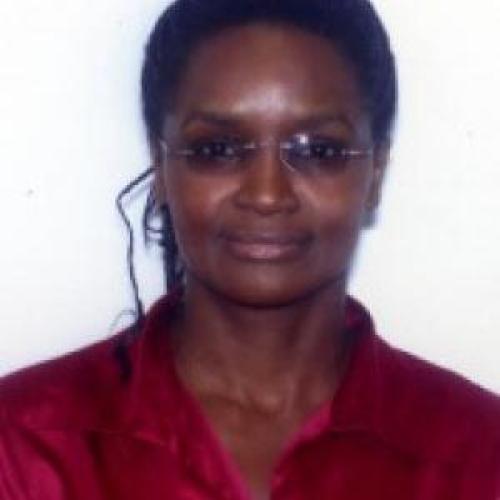
Petronella Kigochi is Associate Professor of Geography at Howard University who specializes in urban geography and development issues in the global South. Her broader research interests include urban environmental sustainability, global governance, global economy, and social and economic justice. Her articles have appeared in Urban Geography, Cities, Habitat International and the Ohio Journal of Science. She received her Ph.D. from Kent State University, her M.A. from University of Maryland, College Park, and her B.A. from St. Bonaventure University.
Geography
Kent State University
2002
Geography
University of Maryland, College Park
1998
Journalism Mass Communications; Spanish
St. Bonaventure University
1994
Geography is the science of place, space, and environment and this course relies on these themes to analyze the world’s major regions. This course examines places and the connections between places to build critical understandings of the roles of physical and human geographies in global economic, political, social, cultural and environmental systems. A primary aim of this course will be to gain an understanding of what underlies differences in various parts of the world; what causes places to change; and what happens as regions interact with their neighbors and with wider national and international trends. Topics covered: the physical environment and human impact on the environment; global economic trends; geopolitics; and our modern global culture.
Economic geography combines elements of geography, economics, and business to analyze development matters. The purpose of development is to improve quality of life, for example, by providing jobs, housing, clean water and air, cheap transport, etc. This course will examine the various mechanisms and forces that have an impact on development. Whether development takes place depends on social, economic, political and environmental issues which may hinder or assist in achieving economic progress, hence, we will pay particular attention to these issues. We will also study the ways in which economic activity is distributed across space, the reasons why such activity is distributed as it is, and the continuous processes of change that serve to modify the spatial organization of economic activity across the globe. In addition, we will analyze how various nations and regions of the world have managed to achieve economic progress, and examine why some of them have been more successful than others in achieving economic growth and change. Finally, we will explore solutions offered by scholars on how less developed countries can achieve economic growth.
Geography is the science of place, space, and environment. This course analyzes the earth’s physical environment and its impact on humans in an effort to understand the environmental challenges facing the world. Some of the major topics to be covered include weather, climate and climate change; landforms; biosphere; Earth’s resources and environmental protection, natural hazards, sustainable cities, food and agriculture. The course also explores man’s impact on the environment by analyzing earth’s natural resources their importance, use, distribution and management. An analysis of man’s impact on the environment gives us the tools to develop sustainable solutions to twenty-first century environmental problems.
Geography is the science of place, space, and environment and in this course we will analyze these issues in the urban environment with a special focus on sustainability. We live in an urbanizing world with over half of the world’s population living in cities and rapid urbanization is expected to continue in emerging economies and other parts of the global south. This course examines the theory, politics and practices shaping urban sustainability initiatives and tries to address the challenges of sustainability encountered in cities around the world. Alternative approaches to achieving sustainable development in urban areas including smart growth, circular economy and ecological restoration will be introduced and evaluated. Through case studies from different parts of the world students will become familiar with the dimensions of more ecologically sound decision-making. Topics to be covered will include urban sprawl, green building, environmental justice, sustainable energy and transportation, and climate change.
Political Geography is the study of the ways geographic space is organized within and by political processes, in other words, it focuses on the spatial expression of political behavior. This course aims to give students a critical introduction to political geography and geopolitics. To accomplish this goal we will focus on international and global perspectives within political geography and examine the ways in which humans have arranged the territory of the Earth's surface; we will analyze the internal and external relationships of politically organized areas; examine the effects of political actions on social and economic conditions; analyze the significance of geographical factors in geopolitics, global governance, and global conflicts.
Geography is the science of place, space, and environment. This course analyzes the physical and human geography of Africa, including an examination of the effects of globalization on changing environmental, cultural, economic, urban, and political landscapes. The course will expose students with little or no geographic training to a variety of contemporary ideas, theories, and concepts in African geography, and their applicability to “real world” situations. Topics to be covereverd: urbanization, environmental sustinabibility, closing the technological gap, the impact of Chinese investments on the continent.
Geography is the science of place, space, and environment. This course analyzes Latin American environmental, economic, political and cultural issues in an attempt to understand how they impact the people in the region and the world at large. The Global Age has interconnected countries around the world making them more interdependent than ever before and these changes impact local lives everywhere. A primary aim of this course will be to gain an understanding of how the peoples of Latin America are impacted by these global changes and also how they in turn have impacted the rest of the world. Topics to be covered: environmental conservation in the Amazon Basin, Chavismo and the rise of the leftist governments in Latin America, and emerging economies in Latin America.
Urban planning and small-scale enterprises in Nairobi, Kenya
The important role played by the informal sector in most economies in less developed countries is now recognized by governments and international agencies. However, enterprises in the informal sector continue to encounter various legal barriers that prevent them from attaining their full potential. This paper examines the performance of small-scale enterprises in three neighborhoods in Nairobi, Kenya. The study reveals that government intervention and donor funds are essential to enable small-scale enterprises to attain their full potential. However, government and donor agencies provide more assistance to enterprises located in neighborhoods that have security of tenure and open space available for development. The study also demonstrates that with the installation of basic infrastructure, and the elimination of both rigid regulations and the threat of demolition, the enterprises perform more efficiently and new enterprises come up diversifying neighborhood economies and creating job opportunities. This highlights the need for urban planners to allocate land and provide basic infrastructure for the informal sector. Government intervention and funds from donor agencies are, therefore, crucial in enhancing the performance of small-scale enterprises and creating jobs.
Failed top-down policies in housing: The cases of Nairobi and Santo Domingo
In the past, various strategies based on top-down approaches were employed to curb the housing crisis in less developed countries (LDCs), but most failed because they did not engage the community in development projects. During the 1980s, the UN launched the bottom-up approach, which emphasizes the involvement of community-based organizations in shelter projects. This approach promotes enabling strategies in an effort to overcome obstacles encountered under the top-down approach: namely displacement, affordability, cost-recovery, and replicability. This paper explores what LDCs are doing to implement the bottom-up approach, and this is accomplished by examining the cases of Nairobi, Kenya, and Santo Domingo, the Dominican Republic. The study analyzes how the governments of both countries have responded to the policies promoted under the two approaches.
The current global housing policy, the enabling approach, emphasizes the need for governments to encourage community participation in the shelter sector. This research examines the role of the government and community-based organizations (CBOs) in the housing sector and analyzes how they interact. To determine whether governments and CBOs are participating in the shelter sector as advocated under the approach, this study examines the role of two CBOs engaged in upgrading shelter for the poor in Santo Domingo, the Dominican Republic. This research demonstrates that the enabling approach can be effective if the government is supportive and CBOs are engaged in the planning, decision-making, and implementation of the housing project. This study finds that cooperation between the implementing NGO, CBOs, and households is crucial for the success of the housing project. The study also demonstrates how the enabling policies employed in Santo Domingo, including low-cost labor and use of low-cost building materials, help overcome obstacles encountered under previous housing policies such as displacement and affordability issues.