Doctor of Philosophy (Ph.D.)
Communication/Media Studies
Howard University
2006

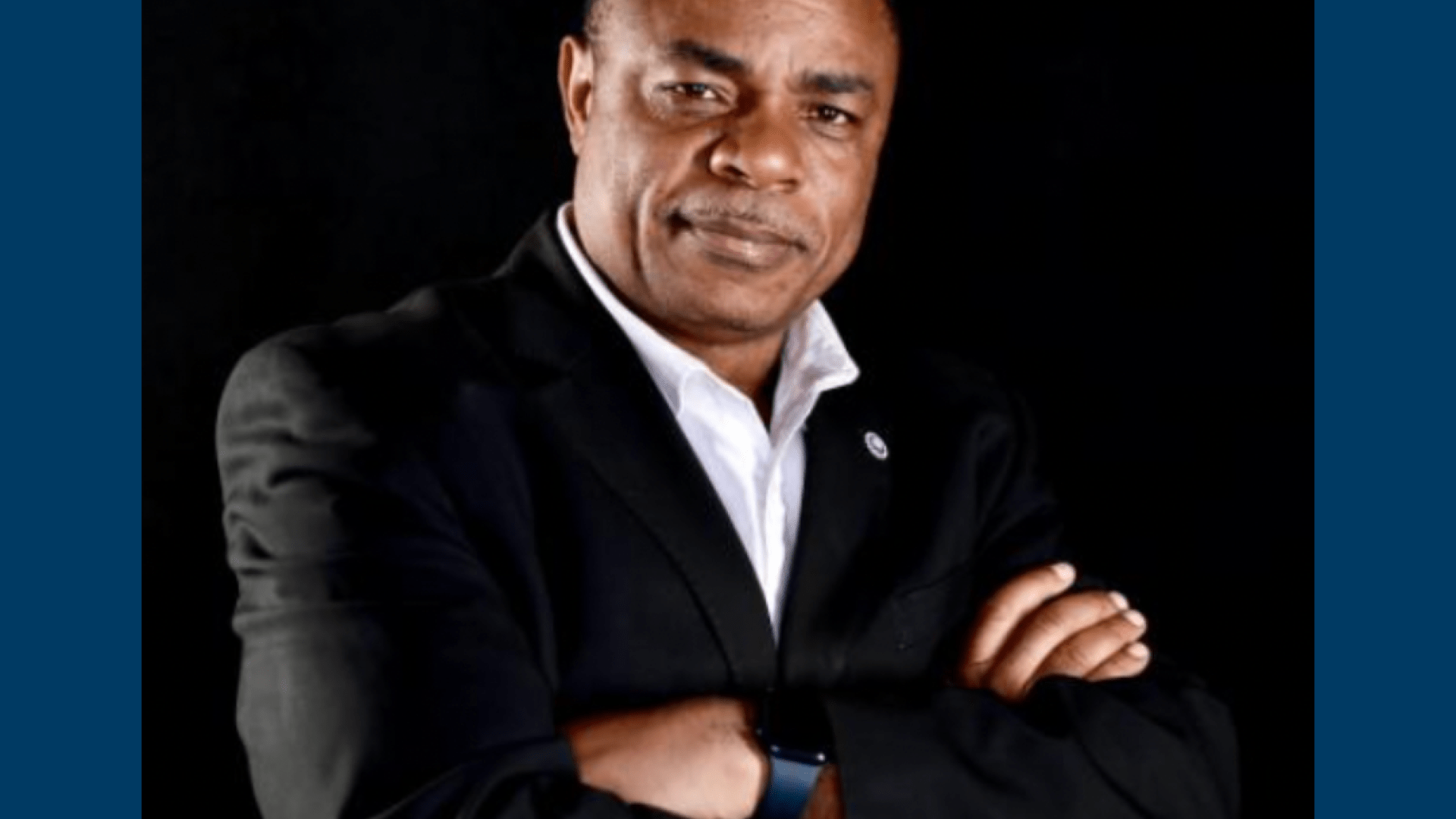
Kehbuma Langmia, Ph.D. is a Fulbright scholar/professor and chair in the Department of Communication Studies, School of Communications, Howard University. A graduate from the Communication and Media Studies Program at Howard University, Langmia has extensive knowledge and expertise in Information Communication Technology (ICT), Intercultural, Cross Cultural and International Communication, Black Diaspora Communication Theory, Decolonial Media Studies, Social Media and Afrocentricity. Since earning his Ph.D. in Communications and Media Studies from Howard University, he has published 18 books, 21 book chapters and 15peer-reviewed journal articles nationally and internationally.
In 2020, he received the prestigious NCA Orlando Taylor distinguished research scholar award as a top scholar in African and African American communication publications. He is a visiting scholar at Daystar University, Kenya and MUBS, Makerere University, Uganda. In November 2017, Langmia was awarded the prestigious Toyin Falola Africa Book Award in Marrakesh, Morocco by the Association of Global South Studies for his book titled “Globalization and cyberculture: An Afrocentric Perspective”. For the last four years he has been selected by Howard University to act as scholar coach for the Howard University Summer Writing Academy.
In 2019, he was selected among the 35 USA Professors chosen from a competitive pool of over 100 applicants to serve in the Visiting Professor Program at Fordham University in New York organized by ANA. In addition, he regularly gives keynote speeches on Information Communication Technology, Black Diaspora mediated communication, and Social Media in prominent national and international universities, including the Library of Congress, the National Intelligence University (Department of Defense, USA) and National Defense University (Department of Defense, USA); Morgan State University (Maryland, USA); Bowie State University (Maryland, USA); Melbourne University (Australia); Buea University (Cameroon), Madras Institute of Technology, (India); ICT University, (Cameroon) and Covenant University (Nigeria), Makerere, University Business School, MUBS, (Uganda) and Temple University, Pennsylvania. He was the 2017 Maryland Communication Association Keynote Speaker holding at College of Southern Maryland, Waldorf, MD and Communication Educators’ Association Conference at Winneba, Ghana in 2019.
Some of his books are: Black/Africana communication theory, published in 2018 by Palgrave/Macmillan Press; “Globalization and cyberculture: An Afrocentric perspective” published in 2016 and “Social Media: Culture and Identity”, published in 2017 by Palgrave, Macmillan Press & the latter co-edited with Tia Tyree published by Lexington Books. He has recently published, “Digital Communication at Crossroads in Africa: A decolonial approach” in 2020 with Dr. Agnes Lucy Lando of Daystar University, Kenya. His most recent publications are “Black Lives and digiculturalism” published by Lexington 2021; Paradise of Love and Pain, published by Spearsmedia Press in 2022 and Decolonizing Communication Studies published by Cambridge Press in 2022. He published in 2023" Black Communication in the age of disinformation: Deepfakes and synthetic media" with Palgrave, Mcmillan publishers. His latest publication is titled " Black 'Race' and the White Supremacy saga" published by Palgrave in 2024. His forthcoming books include: 1) Black Communication Theory volume 2 to be published by Palgrave, McMillan publishers and 2) Research Methods for Afrocentric Scholarship to be published by Routledge.
Communication/Media Studies
Howard University
2006
African and African American Literature
Yaounde University
English
Yaounde University
Principal Investigator: (National Science Foundation, 2014 in progress) for Mobile Technology and students cognition.
Co-Principal Investigator: (Financial Literacy and Retirement savings, 2013) United States Department/ SSA.
Principal Investigator: (Summer grant, 2012) Faculty Fellowship for National Edowment for Humanities
Co-Principal Investigator:(Byerly et al.2008) in a Benton Foundation Research Grant on News Media Survey in DC and MD, 2008
Co-Principal Investigator:(Mbarika et al. 2009) in a NSF Research Experience for Undergraduate and ICT for Africa.
Co-Principal Investigator: (Working Progress) in an NEH research initiative for Historical Black Colleges and Universities.
Read: Voice of America | Analysts Say Reformed Pan-African Parliament May Provide Needed Solutions
Black ‘race’ and the White Supremacy Saga
This book examines the conundrum that has haunted the Black and White ancestry for ages on what supremacy actually means. Is it Black or White supremacy? Granted, the term White supremacy has occupied the sociopolitical, cultural and economic discourse for ages, but what does that really imply? All other ancestries on planet earth have been coerced to believe that conformity to Euro-American lifestyle is the way to become ‘civilized’ on planet earth. But the term civilization owes its genesis to the African cultural and educational achievements in Egypt. Consequently, Black ancestry, the first human species on planet earth, should lead mankind to cultural and epistemological supremacy but that has always been met with skepticism. This book examines this debate, especially between the Black and White ancestry.
Black Communication in the Age of Disinformation: DeepFakes and Synthetic Media
This book explores the consequences of the changing landscape of media communication on Black interactions in the virtual space. Current developments in technology, such as facial recognition, have already disproportionately affected people of color, especially people of African descent. The rise of DeepFakes and other forms of Fake News online has brought a host of new impacts and potential obstacles to the way that Black communities communicate. With a focus on the emergence of DeepFakes, and AI Synthetic Media, contributors have explored a range of themes and topics, including but not limited to: How do AI and digital algorithms impact people of color? How does Social Media shape Black women's perception of their body? How vulnerable are young Africans to social media generated fake news?
Black Lives and Digi-Culturalism: An Afrocentric Perspective
Black Lives and Digi-Culturalism: An Afrocentric Perspective uses several lenses to examine the role of African Americans and Africans in the production and consumption of information in digital spaces. This book explores topics such as Black confluence of digital and in-person spaces, cyberculture and Black identity, cyberfeminists and Black gendered voices, digi-culture and racism, capitalism and digital colonization, digital activism and politics, minorities and artificial intelligence, among other topics. Scholars of African and Black Diaspora studies, digital media culture, and communication will find this book particularly interesting.
Decolonizing the African Mind in the Digital Space in African Media Space and Globalization (pp. 343-354)
As the communication discipline is witnessing a paradigm crisis, the entire human race is also witnessing another crisis: that of struggling to resolve in-person communication, which is rapidly being replaced by virtual/online communication. These two crises have stormed the geo-social and cultural spaces at the wrong time in human history. COVID-19 has invaded inter-human economic, social, and political spaces and has drastically transformed its multicultural spaces and it is not letting up. Therefore, communication for humankind is no longer what it used to be and the situation is dire for communicators and communicologists in the subaltern, especially for those in the African digital communicative spaces.
To be or not to be: decolonizing African media/communications in Routledge Handbook of African Media and Communication Studies
In June 2009, Facebook Swahili was launched by Swahili scholars in the west. This marked a major step towards decolonizing media dissemination and consumption in the horn of Africa from the claws of western domineering languages. Electronic and digital media engineers from abroad never take pains to spend years and months in our countries to study our communicative cosmologies. The colonial experiment on the continent of Africa created an epistemic inferiority in the cognitive abilities of her citizens. Africans are still suffering from mental incarceration brought unto them by European conquest of the continent. Vast populations of Africans in rural settings, suburban communities and cities have stuck to their indigenous languages. However, these populations are marginalized because priority is given to those proficient in the colonial languages. Years of subjugation of the African people to occupy the inferior position on the ladder of human progress has had a serious toll on them and the mental evolution of its subsequent generations.
Kehbuma Langmia (PhD) received the prestigious Toyin Falola Book Award by the Association of Global South Studies for his recent book entitled “Globalization and Cyberculture: an Afrocentric Perspective.” To speak about the topic, Africa 54’s Vincent Makori interviewed the author