Doctor of Philosophy (Ph.D.)
Public Policy, American Politics & Public Administration
University of Georgia
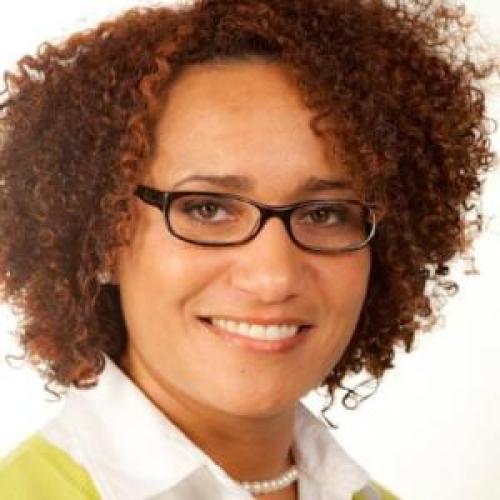
Keesha M. Middlemass, Ph.D., is a (full) Professor in the Department of Political Science at Howard University. She teaches graduate and undergraduate courses in public policy, politics and punishment, and American Politics.
Middlemass' research focuses on the intersection of race, public policy, institutions, and how policies impact disadvantaged individuals and communities, particularly those who are justice impacted. Using mixed methods and interdisciplinary frameworks, including ethnography, interviews, surveys, focus groups, and archival research, she combines first person narratives with analyses of politics and policies to explore who benefits and who is burdened by a range of public policies. Middlemass focuses specifically on questions about the politics of punishment, racial justice, and the lived experiences of formerly incarcerated adults; with her multi-layered approach and analyses, she proposes policy alternatives to reduce the social, economic, and political harms caused by policies.
In her award-winning book, Convicted & Condemned: The Politics and Policies of Prisoner Reentry (NYU Press, 2017), she makes a significant contribution to the literature by applying social disability theory to prisoner reentry, the politics of punishment, and the resulting policies that are produced. Her in-depth analysis of interview and survey data, as well as ethnography, she showcases the challenges men and women encounter when reentering society. Middlemass argues that many public policies that deny adults access to social programs and employment opportunities create perverted incentives for those attempting to reenter society successfully. Currently, Middlemass is the principal investigator (PI) of a three-year grant funded study examining clean slate laws and prisoner reentry in Virginia.
In a second line of research, Middlemass and her colleagues examine food insecurity, mental health, eating disorders, and SNAP benefit useage in socially and politically disadvantaged communities. Using psychological tools and assessments, the interdisciplinary team examines the intersections of mental and physical health, economic status, and social well-being, including food insecurity. This line of research explores the social impediments and psychological well-being that marginalized families and individuals encounter due to poverty. A significant finding of this body of work challenges the “traditional” notion of who is likely to develop an eating disorder; they found the notion that only middle-class and higher income heterosexual white women and girls experience eating disorders is incorrect. Instead, they argue and show that racially and economically diverse groups also experience disordered eating. The work produced and published by the research team led to a major change in the direction of the eating disorder sub-discipline of psychology.
Middlemass has written or co-edited three books and authored and co-authored dozens of peer reviewed articles published in Punishment & Society, Aggressive Behavior, The Prison Journal, Ohio State Journal of Criminal Law, Feminist Formations, Eating Disorders: The Journal of Treatment & Prevention, and Public Health Nutrition. She is also the author or co-author of several peer-reviewed chapters published in university press books.
Middlemass is a member of the Racial Democracy, Crime and Justice Network (RDCJN), a former Fellow at the Brookings Institution, former Andrew Mellon Post-Doctoral Fellow on Race, Crime and Justice at the Vera Institute of Justice in New York City, and is a former American Political Science Association Congressional Fellow. While at Brookings, Middlemass published blogs about the intersection of politics and policy, and contributed to the launch of a new series, Uprooted: Rediscover-ing American History. Uprooted examines the political, social, and economic contributions of racially marginalized individuals and groups who have shaped America’s institutions, policies, and politics to ensure that the past is not erased and that the national story about fighting for racial equity and social justice is kept alive in today’s political environment.
Middlemass earned her M.A. (American Politics) and Ph.D. (Public Policy, American Politics & Public Administration) from The School of Public & International Affairs at the University of Georgia.
Public Policy, American Politics & Public Administration
University of Georgia
American Politics
University of Georgia
Political Science
Wichita State University
This advanced undergraduate course is about public policy in the U.S. & includes the following topics:
This graduate course explores public policy formulation in the United States. Students learn about the major theories, models, & analytical frameworks used to study public policy; focuses on the factors that determine what is and is not a public issue; explores how target populations shape the public agenda; analyze the key institutions, elected and unelected officials, & other actors that influence the formulation of policy at different stages of the policy process; and apply this knowledge to study different public policies and different social issues (e.g., criminal law, housing, immigration, social welfare).
2025-2027. $500,000 (Principal Investigator) The Clean Slate Initiative to study clean slate policies and prisoner reentry in Virginia.
2021. $75,000 (Co-Principal Investigator) The Wilson Foundation Convening Grant for Reentry Ready Project in New Orleans, Louisiana, partnered with Consensus Building Institute & Convergence.
2020. $250,000 (Co-Principal Investigator) Knight Foundation Grant, Lead Principal Investigator: “Black and Urban Digital Protections and Democratic Knowledges in Washington, D.C.” with Roger Caruth, Brandon Hogan, Kim Michelle Lewis, Bahiyyah Muhammad.
Convicted & Condemned: The Politics and Policies of Prisoner Reentry (New York University Press, 2017). National Conference of Black Political Scientists (NCOBPS)
2022. Department of Political Science Outstanding Scholarship Award for distinguished scholarship and publications, Howard University
2021. College of Arts & Sciences (COAS) Distinguished Scholarship Award, Howard University
2017. Distinguished Research Award, Trinity University
2024. Winner of the Drs. Jewel & James Prestage Mentoring Award for Outstanding Mentorship. National Conference of Black Political Scientists (NCOBPS)
2017. Distinguished University Achievement Award for Teaching, Trinity University
2016. Alpha Phi Omega, “The Brightest Bulb” Best Teacher Award Winner (annual award from students), Trinity University
2003. Professor Recognition Honors for Excellence in Teaching, University of Kansas
Read: WHEC | Married women face hurdles obtaining REAL ID due to original document rule
Read: WSOC-TV | For families with sick kids, the rise of vaccine hesitancy could be life-threatening
Watch: Trump’s defiance in the face of federal charges
Read: Vanguard News | CONVICTED FELON IN WHITE HOUSE MEANS CLEAN SLATE LAWS JOIN POLITICAL DISCOURSE
Read: The Providence Journal | Inside Story: Keesha Middlemass, Howard University expert on incarceration
Read: Bulletin of the Atomic Scientists | A team of Howard University researchers wants to know how disinformation impacts Black people
Watch: PBS NewsHour | The barriers to reentering society after prison
Prisoner Reentry in the 21st Century: Critical Perspectives of Returning Home
This groundbreaking edited volume evaluates prisoner reentry using a critical approach to demonstrate how the many issues surrounding reentry do not merely intersect but are in fact reinforcing and interdependent. The number of former incarcerated persons with a felony conviction living in the United States has grown significantly in the last decade, reaching into the millions. When men and women are released from prison, their journey encompasses a range of challenges that are unique to each individual, including physical and mental illnesses, substance abuse, gender identity, complicated family dynamics, the denial of rights, and the inability to voice their experiences about returning home.
Misinformation is eroding the public’s confidence in democracy
Convicted and Condemned: The Politics and Policies of Prisoner Reentry
Convicted and Condemned explores the issue of prisoner reentry from the felons’ perspective. It features the voices of formerly incarcerated felons as they attempt to reconnect with family, learn how to acclimate to society, try to secure housing, find a job, and complete a host of other important goals. By examining national housing, education and employment policies implemented at the state and local levels, Keesha Middlemass shows how the law challenges and undermines prisoner reentry and creates second-class citizens.
Child Support Enforcement, Poverty & the Creation of New Debtor’s Prison
This article traces the development of the child support enforcement systems through legislative, administrative, and judicial decisions, and, alongside empirical studies, examines how public policies purportedly enacted for the benefit of children living in economically fragile families have harmful consequences.
With less than 5 percent of the planet’s population, the United States houses 22 percent of the world’s prisoners. The challenges of navigating that system don’t end when the convicted felon completes his or her sentence. Keesha Middlemass shines a light on the substantial barriers felons face when they try to reenter society.
Every year, more than 600,000 people leave state and federal prisons in the United States and millions more cycle in and out of jails. Many of those individuals find that even though they have served their time, they still are not free, often facing barriers to housing, food, employment and more. PBS NewsHour’s Nicole Ellis hosts a panel focusing on making reentry work.
Howard University professor Keesha Middlemass says the idea of domestic terrorism needs to be attached to these rioters.