Psychology & Religious Studies
B.A.
New York University, New York
1992

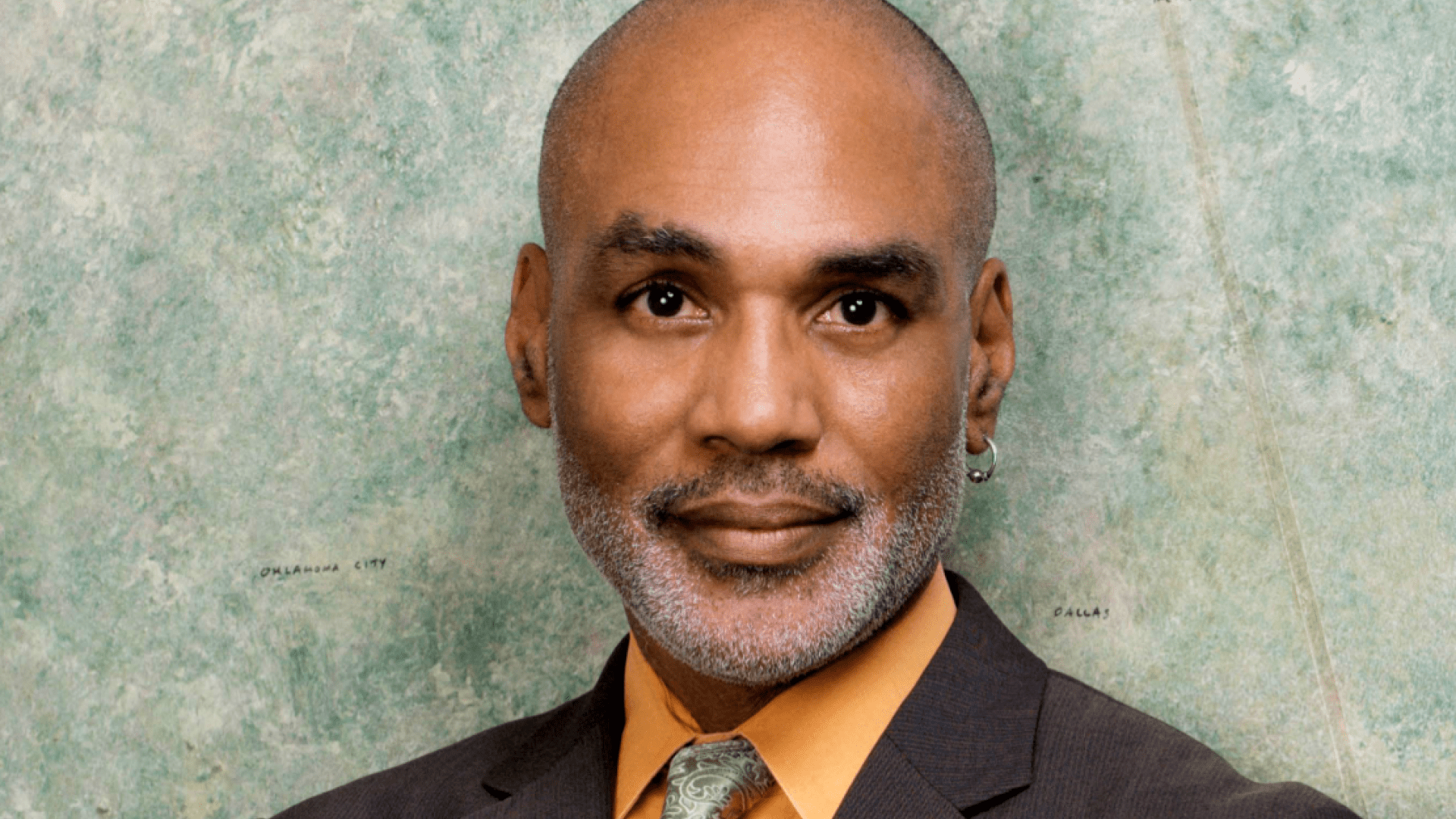
Ezer Kang, Ph.D., is a professor of psychology and Assistant Director of Training in the Clinical Psychology Ph.D. program at Howard University. With academic appointments spanning the Department of Psychology as well as affiliate roles in the Center for African Studies and the Department of Psychiatry & Behavioral Sciences at Howard University Hospital, Dr. Kang brings extensive clinical and research expertise to his teaching and mentorship. He also holds adjunct positions at the University of Global Health Equity in Rwanda and the University of Ibadan’s Center for Child and Adolescent Mental Health in Nigeria. His research and clinical work converge on understanding how persons and communities interact in the context of poverty to influence the mental and physical well-being of persons living with HIV in US cities and the Global South.
Kang’s research has addressed HIV stigma, mental health well-being, health service utilization, and psychosocial outcomes among diverse populations across settings in Nigeria, Rwanda, India, Thailand, Guatemala, and the united states. Dr. Kang has received numerous honors for his work, including the Distinguished Faculty Awards for Outstanding Teaching (2024–25) and Outstanding Scholar (2019–20) from Howard University’s College of Arts & Sciences, a 2023 Public Heath Advisor appointment at Health and Human Services, SAMHSA, and multiple Fulbright Specialist grants.
In the classroom, Kang teaches courses that explore psychopathology, neuropsychological assessment, cognitive psychology, ethics in health service psychology, research design and methods, and community approaches to HIV prevention and care. Kang’s extensive portfolio of peer-reviewed publications and presentations reflects his dedication to advancing understanding of stigma, health disparities, and the intersection of psychological science and global public health.
B.A.
New York University, New York
1992
M.A.
Fuller Theological Seminary, School of Theology, Pasadena
1996
Ph.D.
Fuller Theological Seminary, Graduate School of Psychology, Pasadena
1999
Pre-Doctoral Clinical Psychology Internship
Boston University Medical Center, Center for Multicultural Training in Psychology (CMTP), Boston
1999
Post-Doctoral Research Fellowship in HIV/AIDS
Memorial Sloan-Kettering Cancer Center, New York
2000
PSY# 1001192
Department of Psychiatry & Behavioral Sciences
Department of Community Health and Social Medicine
Cultural contexts are pivotal in shaping our identification, experience, expression, and treatments of mental illness across the human lifespan. This course unpacks the messy relationship between culture and psychopathology, recognizing that culture encompasses social roles, local norms, transnational migration, and new information technologies (yep TikTok). The complicated interplay of these interactions influences the dignified treatment of people from diverse backgrounds living with mental illness. We will embark on the study of mental illness, that is psychopathology, by critically examining the phenomenology, epidemiology, classification, illness experience, and treatment for 8 major clinical syndromes. We do so by integrating universal and culture-specific approaches to understanding mental illness. The objectives of this course will be to stimulate your curiosity about culture-bound definitions of mental illness (and wellness) and its prevention and treatment – three ambitious and rewarding tasks we will approach through lectures, discussions, writing, and readings. By our mutual commitment to learn together, by the end of the course, you will be able to:
Describe emerging questions and applications of cross-cultural psychopathology to global mental health.
This course introduces the theory and practice of neuropsychological assessment – a specialized field of clinical psychology that measures and interprets the relationships between human central nervous system functions (with a focus on the brain), cognition, emotion and behavior. The goal of assessment is to identify patterns of performance across different cognitive and behavioral domains that meaningfully influence people’s lives. You will learn the standard test battery, collaborative therapeutic neuropsychological assessment model (CTNA), and “hypothesis testing” approaches to assess for attention, processing speed, memory, language, executive functioning, visuospatial, reasoning, and motor function in adults. Particular attention will be given to race, ethnicity, gender, and social class - all of which can interactively influence cognitive function and test performance. Taken together, the underlying principle of this course is that neuropsychological assessment is not a “one-size-fits-all” practice because values, experiences, and social expectations of behavior can differ across settings, and these differences bear significantly on how we interpret and use our assessment findings.
This course presents an overview of research on and applications of cognitive psychology, “a study of how people perceive, learn, and think about information” (Sternberg, 2009). We will investigate everyday activities, and in doing so, much of our ordinary mental abilities would seem a bit more extraordinary. Cognitive psychology takes us behind the scenes of the simplest daily experiences - perception, attention, memory, language, reasoning, decision-making, and problem solving - and demonstrates the ridiculously complex processes that make it all happen. The objectives of this course will be to stimulate curiosity about how we juggle and apply information and knowledge, and to critically examine (and appreciate) major theories that have helped explain how we carry out everyday activities
What values inform how psychologists practice as practitioners, scientists, and teachers? What constitutes proper professional conduct? Is the motivation “to do the right thing” sufficient? How do psychologists address “moral distress” when professional ethics and law collide? Handelsman and colleagues (2005) proposed that addressing these knotty questions (with real-world implications) requires more than simply applying a set of rules or algorithmic formulas, but calls for adapting a new professional “ethical culture” that is defined by a system of symbolic meanings (e.g., Ethical Standard 2.04) anchored in social institutions (i.e., American Psychological Association) and patterns of interpersonal interactions (psychologists and person receiving psychological services). Just as many of you are adjusting to the rich culture at Howard this year, you will similarly begin the process of “ethical acculturation.” The goal of this course is to help you begin this process. By our mutual commitment to learn together, by the end of the course, students will be able to:
Recognize ethical dilemmas as they arise and apply ethical decision-making processes in order to resolve the dilemmas.
The disproportionate burden of HIV/AIDS in global cities coupled with a decrease in HIV mortality and morbidity have created an opportunity to apply principles and values of community psychology to help guide our understanding of the complex interplay of environmental and individual-level drivers that influence HIV primary prevention and care for persons living with HIV. Community psychology, the study of person-environment interactions, offers a unique perspective on how social structures, neighborhoods, and individuals shape HIV prevention and care delivery particularly for communities living in urban poverty. Specific theories of participatory-action research, multi-level community interventions, structural dimensions of HIV stigma, HIV syndemic framework, and public health policy implications will be critically examined and discussed.
Co-Principal Investigator: American Cancer Society, Cancer Health Equity Research Center (CHERC). Distress Screening Program at a Community-Based Cancer Center. 2023-present
Principle Investigator: National Institute of Mental Health (NIMH; 1R15 MH117631-01). Improving Child Mental Health Service Utilization in Ibadan Nigeria Using a Community Based Participatory Research Approach (with Community Partner: University of Ibadan). (Total: $325,381). 2018-2023
2022 Fulbright Specialist Grant; University of Global Health Equity, Rwanda. Capacity Building for Rural Mental Health in Rwanda.
My research broadly focuses on how individual and community factors interact in the context of poverty to influence the mental and physical health of minority groups living in US cities and low-income and middle-income countries. The trajectory of my scholarship has been strongly influenced by my clinical and community work with children, adolescents, and adults living with HIV for the past 30 years in Los Angeles, Boston, New York City, Chicago, and Washington DC. Since 2011, I’ve broadened my researchbeyond partnering with community-based organizations in the US to include institutions in Nigeria, Rwanda, Guatemala, India, and Thailand on projects that address specific global health concerns raised by local providers and policymakers. These projects focused on knowledge of HIV transmission and illness stigma in rural Rwanda, intergroup conflict between survivors and génocidaires in post-conflict Rwanda, utilization of accessible child mental health services in Nigeria, poverty and mental health outcomes among persons living with HIV in India, and antiretroviral adherence among children with perinatal HIV in Thailand. In addition to partnering with community institutions, I work closely with undergraduate, doctoral students (Clinical Psychology) and research associates my Global Community Health Lab.
Howard University, College of Arts & Sciences
Howard University, College of Arts & Sciences
Substance Abuse and Mental Health Services Administration (SAMHSA), Center for Mental Health Services
University of Global Health Equity, Rwanda
University of Ibadan, Centre for Child and Adolescent Mental Health, Nigeria
University of Chiang Mai, Department of Pediatrics, Thailand
Improving Child Mental Health Service Utilization in Ibadan Nigeria Using a Community Based Participatory Research Approach (with Community Partner: University of Ibadan). Principle Investigator. 9/11/2018 – 9/10/2021
Living with HIV Across the Lifespan Shapes Treatment Views of Black Adults with Perinatal HIV Infection
Kang, E., Mellins, C.A., Kim, W., Dolezal, C., Quick, P., Reyes, V., Emerenciano, H., Poku, O.B., Kluisza, L., Hosaka, K.R.J., Robbins, R., & Abrams, E.A. (2025). Place security and mental health: Two sides of the same coin among young adults with perinatally-acquired HIV and exposure in New York City. AIDS & Behavior (Online first, 23 December 2025), https://doi.org/10.1007/s10461-025-04989-0
Kang, E., Kindler, C., Amour, A.T.S., Locus, K., Hosaka, K.R.J., Leslie, M.C., & Patel, N.A. (2025). Youth engagement synergy in mental health legislation and programming. Special issue: Home and Community Based Services for Youth and Families in Crisis (K. Gordon-Achebe, R. Legha, and M. Durham, Editors). Child and Adolescent Psychiatric Clinics of North America, 33(4), 741-754
Family members who witnessed the 1994 genocide against the Tutsi arguably shape their children’s narratives of the events and subsequent formation of outgroup prejudice. An understanding of whether vestiges of the genocide are transmitted to future generations informs ongoing peacebuilding efforts. We, therefore, examined the relationship between child and guardian attitudes toward one’s outgroup among households of survivors or génocidaires and investigated whether this relationship was potentially affected by social interactions with members of outgroups (survivors or génocidaires) outside the family.
If we build it, they will come: Caregiver decision to use an accessible outpatient psychiatric service for children and adolescents in Nigeria in Social Science & Medicine, 279(2021)
If child and adolescent psychiatric (CAP) services were accessible in lower-middle-income countries (LMIC) such as Nigeria, what individual and socio-cultural factors would influence caregivers’ willingness to use these services when they are needed? To address this question, we conducted structured interviews with a stratified random sampling of 442 adult caregivers of children aged 5 to 19-years who lived within 10 km of an established CAP outpatient service in Ibadan, Nigeria.
Based on data from a longitudinal study in New York City examining mental health and health risk behaviors among 182 AYAPHIV, we examined if increased perceived HIV stigma predicted mental health, future orientation, HIV-disclosure, and healthcare transition over time (2003–2018). Findings from linear mixed-effects modeling indicated that older age predicted poorer mental health, less future orientation, more HIV-serostatus disclosure, and adult medical services utilization. Perceived stigma was the only significant predictor of mental health and mediated the association between age and mental health—highlighting the importance of addressing stigma across development for AYAPHIV while addressing systems that perpetuate them.
Knowledge of HIV transmission and illness stigma: A relationship revisited in rural Rwanda
We examined the relationship between quantitative and qualitative measures of HIV knowledge and four forms of stigma (individual attitudes, felt normative, social distance, and stigma perceived by PLHIV) among 200 rural residents in Rwanda. Forty-two percent qualitatively reported concurrent accurate and partial knowledge of HIV transmission. Being more knowledgeable about HIV transmission was associated with less desire for social distancing from PLHIV. Our findings highlight the continued importance of reinforcing an accurate understanding of HIV transmission and correcting misinformation by drawing on quantitative and qualitative assessments of HIV knowledge as critical arms of HIV stigma reduction programs in low prevalence rural regions.
This cross-sectional study examined predictors of attitudes and relatedness toward génocidaires among survivors of the 1994 genocide in Rwanda. A survey of 448 eligible adults in selected households from 5 districts in Rwanda was conducted in 2013–2014. Structural equation modeling (SEM) techniques were used to test the theorized relationships among age, gender, exposure to genocide events, stressors attributed to the genocide, traumatic stress, and a hypothesized latent factor of attitudes toward génocidaires (positive outgroup stereotypes, beliefs/perceived social norms, revenge toward génocidaires, and social distance).
Poverty indicators and mental health functioning among adults living with HIV in Delhi, India
Poor mental health functioning among persons living with HIV (PLHIV) has gained considerable attention particularly in low-income countries that disproportionately carry the global HIV/AIDS burden. Fewer studies, however, have examined the relationship between poverty indicators and mental health among PHLIV in India. Based on this cross-sectional study of 196 HIV-seropositive adults who received medical services at Shalom AIDS Project in Delhi, India, structural equation modeling and mediation analysis were employed to estimate the associations between poverty indices (household asset index, food security, unemployment, water treatment, sanitation), HIV-health factors (illness in the past 3 months, co-morbid medical conditions), and psychological distress. In the final model, ownership of fewer household assets was associated with higher levels of food insecurity, which in turn was associated with higher psychological distress. Also, the household asset index, food insecurity, and unemployment had a larger effect on psychological distress than new opportunistic infections. These findings build on increasing evidence that support concerted efforts to design, evaluate, and refine HIV mental health interventions that are mainstreamed with livelihood programming in high poverty regions in India.
Antiretroviral medication adherence behaviour among Thai youth with perinatal HIV in Thailand has received growing attention. However, few studies have examined individual predictors of antiretroviral adherence using multiple self-reports. A convenience sample of 89 Thai youth (interquartile range 14–16 years) with perinatal HIV at three paediatric programmes in Chiang Mai completed a structured questionnaire and reported their antiretroviral adherence in the past one, seven and 30 days using count-based recall and a visual analog scale.
This study examined the influences of disadvantaged residential neighborhood on anxiety and depression, and potential resources that buffer against internalizing problems when youths were exposed to neighborhood stressors.
This paper examines Jürgen Moltmann’s trinitarian model of the imago Dei which suggests that humanity bears the image of the mutually supporting persons of the Trinity. A relationship that is characterized by radical equality that fosters participation in that fosters participation in all facets of suffering—an impetus set by the hope established by Christ’s resurrection. It is this divine imago that incites the church to deliberately contradict identities that are spoiled by HIV with one that is of dignity and hope.
This paper examined how knowledge of HIV transmission and stigma potentially influenced attendees’ support for their institutions’ involvement in HIV programs.
This paper will review the process of contextualizing HIV within theological and cultural frameworks that are meaningful for ethnic Chinese church leaders and members. The authors specifically propose two points of integration between public health and ecclesial functions: (1) HIV stigma-mitigation initiatives as informed by Christo-centric teachings of compassion and justice, and (2) HIV prevention and care reframed as social responsibility and informed by the Christian tradition of evangelism. Systems and practices that hinder and promote the involvement of Chinese churches in HIV prevention, care, and stigma-reduction will be discussed.
This paper highlights the importance of considering influences of both perinatal HIV and the culture of poverty on adolescent development, and of adopting multilevel interventions and research to address how interactions among biologic, environmental, and HIV-related stressors (serostatus disclosure, medical treatment adherence, illness stigma) influence the development of adolescents with perinatal HIV.
This 2-year longitudinal study examined the relationship between five HIV-stigma factors (social rejection, negative self-worth, perceived interpersonal insecurity, financial insecurity, discretionary disclosure) and changes in psychological distress dimensions (self-esteem, hopelessness, dread, confused thinking, sadness, anxiety) among a convenience sample of 44 HIV-seropositive Asians and Pacific Islanders in New York City from 2002 to 2004.
Asians and Pacific Islanders (APIs) living with HIV/AIDS in the US are particularly vulnerable to HIV-related stigma largely due to ingrained socio-cultural norms that strongly associate HIV transmission with activities perceived to be immoral. This cross-sectional study examined the relationship between five HIV-stigma factors and psychological distress among 54 HIV-seropositive APIs. Social Rejection, Negative Self-Worth, Perceived Interpersonal Insecurity, and Financial Security were all significantly associated with psychological distress.
This paper describes the cultural attitudes, behaviors, and perceptions that affect access to and utilization of care among Asian undocumented noncitizens living with HIV/AIDS (UNWHA) in New York City. Sixteen semistructured interviews with HIV-positive UNWHAs revealed that their access to care was influenced by community misperceptions of HIV transmission, discriminatory attitudes towards persons living with HIV, competing immigration related stressors, and difficulty navigating service systems.