
Master of Science (M.S.)
Journalism
Columbia University
2004
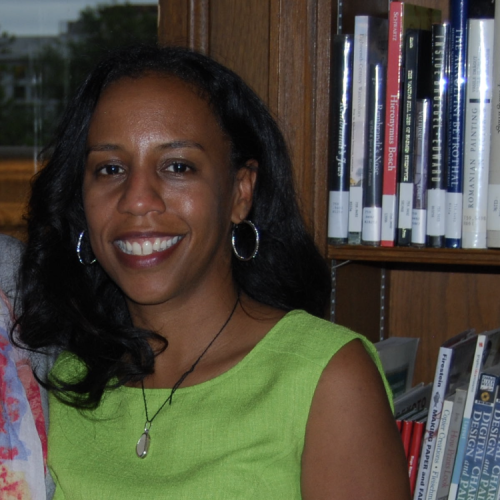
Ericka Blount is a full-time lecturer at the Cathy Hughes School of Communications at Howard University. She is an award-winning journalist, author, screenwriter, producer, and professor. She teaches Fundamentals of Journalism, Truth Be Told, 101 Magazine and Interactive Editing courses. She taught previously at the University of Maryland, Loyola University and Morgan State University.
She has written for a variety of outlets, including The New York Times, The Wall Street Journal, Vibe, Spin, Sports Illustrated, ESPN, The Magazine, People magazine, Essence magazine, The Washington Post, Wax Poetics, Quartz and The Root. She is the author of Love, Peace, and Soul, a book about the history of the show, Soul Train. She’s worked as the Director of Research for the Showtime documentary “Time is Illmatic,” about rapper Nas’ life and seminal debut album and on the documentary about Tupac (Untitled,”) originally directed by Steve McQueen. She’s currently a fellow in the 2020 Sundance Institute Episodic Maker’s lab and has been recognized with the Sundance Institute Comedy Central Comedy Fellowship. Her music journalism archives are housed at Indiana University. She graduated from the University of Pennsylvania and Columbia University’s Graduate School of Journalism.
Blount's interview portfolio includes conversations with Cathy Hughes, Andy Rooney, Fidel Castro, RZA, Earth Wind & Fire, Jay-Z, Common, Maxwell, Kenny Gamble, Lenny Kravitz, Quincy Jones, Nas and Damien Marley, among many others. She is the recipient of the Saul Zaentz fellowship with Johns Hopkins University, the Ruby Award, Deadline Club Journalism Award for Columbia University, New Jersey Newspapers award, and an award from the Society of Professional Journalists.
She’s dabbled in “acting” as an extra on The Wire after covering the show for five seasons. She lives in Baltimore, Maryland, and can be reached at ericka.blount@howard.edu or ericka.illafilms@gmail.com.
Journalism
Columbia University
2004
English and African American studies
University of Pennsylvania
1994
Read: The Hilltop | Remembering The Legacy Of Howard’s Own Roberta Flack
Read: Howard University News Service | An Ode to the Legacy of ‘Chocolate City’, Go-Go Music Lives On
Read: NPR | There Was Nothing Like 'Soul Train' On TV. There's Never Been Anything Like It Since
Listen: WNYC Radio | Dawn vs. Don: Mad Men’s Missed Opportunities
Read: WYPR Baltimore | Love, Peace and "Soul Train"
Love, Peace and Soul: Behind the Scenes of America's Favorite Dance Show Soul Train: Classic Moments
Love, Peace, and Soul tells the story of the television phenomenon known as Soul Train, a show created in the land of bell bottoms, afros, and soul power; a show that became the touchstone of the Baby Boomer generation. Don Cornelius, host and owner of the show, was one of the coolest cats on television. With his platform shoes, wide neckties, and mellifluous voice, he showed the world just how corny American Bandstand was in comparison. In 2012, fans were shocked to hear one of the most powerful men in the music and television business took his own life.
Love, Peace, and Soul is a celebratory, behind-the-scenes collection of anecdotes, stories, and reflections, from the people who were there, about the host, the show, and the power of black music and dance on television.
Play Another Slow Jam: An Oral History of The Quiet Storm
A look back at the radio format its creator Cathy Hughes and legendary host Melvin Lindsey revolutionized 40 years ago
Inside the Release of the New Prince Album 'Welcome 2 America'
In a PEOPLE special edition, two of the Artist's collaborators speak exclusively about Welcome 2 America, the first studio album from Prince's vault. "We did it old-school," says singer Shelby J. "There's seasoning and soul in that tape"
Peaceful Protests and Funeral for Freddie Gray Eclipsed by Violence
The funeral of Freddie Gray and the mass peaceful protests that followed his death were eclipsed Monday night by widespread uprisings and standoffs between young people and police in Baltimore. It started on Saturday in Camden Yards, where kids busted police windows, broke glass at a mall and had standoffs with Orioles fans
Much has been said about the “stop snitching” culture, with tales of witnesses fearing retribution from criminals for speaking up in court, but what happens when the person saying “stop snitching” is not a criminal but a police officer?