Doctor of Philosophy (Ph.D.)
Clinical Psychology
Howard University
2001
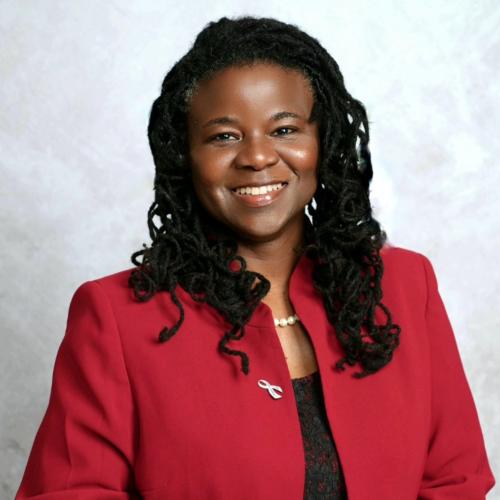
Carla Williams, Ph.D. is an associate professor of medicine and public health at the Howard University College of Medicine. She also serves as the director of the Howard University Cancer Center, leading the strategic vision and operations of the center since 2015. Williams received her Ph.D. in clinical psychology from Howard University. Since 2010, Williams’ collaborative research efforts have resulted in the expansion of her role to function as an Executive Scientist. In this capacity, she builds research teams within and across institutions to promote collaborative research.
In her teaching roles, Williams has developed training paradigms that integrate theory and application. Her teaching philosophy integrates theory, application, innovation, and critical thinking. Her goal is to equip learners with the capacity and confidence to propel innovative solutions for national and global health-related challenges
Williams' scholarship centers around collaborating with community health leaders to promote healthy lifestyles and community wellbeing. Her efforts emphasize engaging communities that have not been adequately represented in research. She leads initiatives designed to promote optimal research collaborations and collective action between scientists and community health leaders.
Her research and advocacy center around understanding and reducing cancer-related health disparities. She collaborates with community health leaders to promote healthy lifestyles and community wellbeing. Williams’ framework for health justice focuses on bringing balance to forces that perpetuate unjust health burdens. Her goal is to create transformative changes that will impact 22nd century health.
Clinical Psychology
Howard University
2001
Clinical Psychology
Howard University
1998
Psychology
Hendrix College
1991
Specialty Area: Cancer disparities, Tobacco cessation and control, Community engaged research
My research broadly addresses issues of health affecting people who have not optimally benefited from the American health system. My area of emphasis is cancer disparities. I serve as community engagement core director for the Georgetown-Howard Center for Clinical and Translational Science (CTSA); the NIMHD Center of Excellence in Health Disparities in the Nation’s Capital (2019-2023); the Howard University Research Centers in Minority Institutions (RCMI) Program; the American Cancer Society Cancer Health Research Center at Howard University; and the Howard-Hopkins Comprehensive Partnership for Cancer Research. Within these grant-funded centers, I facilitated collaborative, participatory research among scientists and between community stakeholders and academic partners. As a result, my function within the Howard University research environment has evolved into the role of an “executive scientist”. In this capacity, I have connected researchers with one another and with external collaborators who broaden the community contexts of health disparities research. I have created pilot research programs that promote community-engaged research; developed technical assistance protocols to help community organizations build capacity to capture and use programmatic data to answer research questions; and trained community representatives and researchers to build sustainable partnerships.
Social and Behavioal Science (SBS) is concerned with the science and practice of addressing the intrapersonal, interpersonal, and group level (micro, meso, macro) factors that influence decisions, behaviors, policies, and environments that have a bearing on the health of the individual and the population. Prominent areas of concern include the knowledge, attitudes, beliefs, social and cultural norms, systems of care, and policies and laws that govern personal behavior. SBS seeks to promote the health of the public by assuring that approaches take into account the socio-cultural, linguistic, economic, organizational and systemic variation among groups and localities.SBS work in public health can take a variety of forms. Examples include, but are not limited to:Program planner or evaluatorProgram managerHealth educatorHealth interventionistPublic health advocateHealth communications specialistHealth researchThe objective of this course is to develop capacity to understand and apply principles of health behavior theory in the context of public health and public health social work. The primary questions to be explored in the course include:What are the theories that underlie health behaviors?How are behavioral theories incorporated into public health practice and research?What are the optimal strategies for disseminating evidence-based behavioral interventions for public healthHow can behavioral intervention strategies be improved?Through assigned readings, classroom discussions, individual assignments, and guided independent study, students will acquire the foundational competencies of the MPH degree:History and philosophy of public health as well as its core values, concepts, functions, and leadership rolesConcepts, methods, and tools of public health data collection, analysis and interpretation, and the evidence-based reasoning and informatics approaches that are essential to public health practiceSystems thinking regarding the dynamic interactions among sectors, organizations, and actors with which public health professionals interact to achieve health improvementsPopulation health concepts, and the processes, approaches, and interventions that identify and address the major health-related needs and concerns of populationsBiological, environmental, socio-economic, behavioral, cultural, and other factors that impact human health, influence the global and societal burden of disease, and contribute to health disparitiesIdentification and pursuit of opportunities for promoting health and preventing disease across the life span and for enhancing public health preparednessConcepts of project implementation and management, including planning, budgeting, human resources, assessment, and evaluationCharacteristics and organizational structures of the U.S. health care system and how they compare to health care systems in other countriesLegal, ethical, economic, and regulatory dimensions of health care and public health policy, the roles, influences, and responsibilities of the different agencies and branches of government, and approaches to developing, evaluating, and advocating for public health policiesPublic health-specific communication and social marketing, including technical and professional writing and the use of mass media and electronic technologyThe cultural context of public health issues and respectful engagement with people of different cultures and socioeconomic strataPrinciples of effective functioning within and across organizations and as members of interdisciplinary and interprofessional teams
The objective of this course is to develop public health professionals who can competently apply principles of community engagement in public health practice and research. Mastery of the course content should result in capacity to effectively engage diverse communities in health-related endeavors and develop research practices that will readily translate to applied settings. Upon completion of the course, students should have enhanced capacity to work collaboratively with community stakeholders to implement public health interventions, conduct research and evaluation, improve the health of communities, and promote health equity.The major questions to be considered include:A. What is “community” and what is the relationship between community and health?B. What are the processes and structures for effectively engaging communities in research?C. What research methods can be employed in community-engagement?D. What ethical issues are relevant to community partnerships?E. How is community-engagement evaluated?Core Competenices in Community EngagementExamine the characteristics that bind people together as a community, including social ties, common perspectives or interests, and geography.Appraise the role of community engagement as a strategy for identifying community health issues, translating health research to communities and reducing health disparities.Summarize the principles and practices of the spectrum of community-engaged research.Analyze the ethical complexities of community-engagement in research and practice.Work effectively in community settings through effective communication, professionalism, accountability and quality of work.
The Howard University Public Health Practicum provides an intensive, sustained exposure to public health practice. The Practicum is a required Applied Practice Experience. The experience is tailored to each learner’s primary area(s) of professional interest and may occur in any setting where public health issues are addressed. All projects must address an aspect of health disparities, health equity, or health justice.The Practicum uses a competency-based approach to build real-world, contemporarily relevant public health knowledge, skills, strengths and capacities. The competencies are based on a nationally standardized set of core public health skills (see Appendix I). Successful completion of the Practicum is based on achieving pre-specified metrics and measures of success, rather than merely completion of a pre-determined number of clock hours.Students and field supervisors work together to develop a project tailored to the current needs and mission of the organization and the student’s area(s) of interest. By the end of the Practicum, students will develop an individual career plan outlining future goals, targeted training and professional development.
Co-Principal Investigator: "Howard- Hopkins Comprehensive Alliance on Cancer Research, Education and equity," Sponsored by National Institutes of Health/National Cancer Institute, Federal, $6,800,894.00. (October 10, 2024 - September 30, 2029).
Co-Principal Investigator: "Howard- Hopkins Comprehensive Alliance on Cancer Research, Education and equity," Sponsored by National Institutes of Health/National Cancer Institute, Federal, $7,000,000.00. (October 10, 2024 - September 30, 2029).
"PAR21-168 Summer Research Education Experience Program. "Howard University Summer Research Education Experience Program in Oral Health”," Sponsored by National Institutes of Health, Federal, $675,000.00. (December 1, 2022 - November 30, 2027).
Williams, C. D., Carter-Nolan, P., "Cancer Health Equity Research Centers (CHERC)," Sponsored by American Cancer Society, Private. (January 1, 2022 - December 31, 2025).
Principal Investigator: "Howard- Hopkins Comprehensive Alliance in Cancer Research, Education, and Equity (H2CAREE)," Sponsored by NIH, Federal, $6,726,529.00. (September 21, 2024 - Present).
Principal Investigator: "Social, Ethical, and Behavioral Implications of COVID-19," Sponsored by NIH/NIHMD, Federal. (November 13, 2020 - January 31, 2024).
Principal Investigator: "Howard-Georgetown Collaborative Partnership in Cancer Research," Sponsored by NIH/NCI, Federal. (September 9, 2019 - August 31, 2023).
Principal Investigator: "Diversity in Cancer Research Institutional Development Grant," Sponsored by American Cancer Society, Private. (July 1, 2021 - June 30, 2023).
Supporting: "Advancing Health Literacy to Enhance Equitable Community Responses to COVID-19 (MP-CPI-21-006).," Sponsored by DC Health, Local, $199,999.00. (December 2022 - Present).
Co-Principal Investigator: "COVID Education," Sponsored by NIMHD, Federal, $154,500.00. (2021).
Co-Principal Investigator: Southerland, "HU RCMI RADx-UP Supplement," Sponsored by NIMHD, Federal, $1,236,000.00. (2020).
Prior funding support has included:
National Cancer Institute
Susan G. Komen
National Institute for Minority Health and Health Disparities
National Center for Acceleration of Translational Science.
Avon Foundation
American Cancer Society
Read: Miami Herald | When these women set a goal, they get it done. Cancer research for Blacks is key priority
Read: The Washington Informer | Howard U. Cancer Center Expands Blacks’ Access to Clinical Trials
Read: Capital B News | Talking About COVID-19’s Racial Disparities Makes White People Care Less. But There’s An Exception
Black persons have higher overdose death rates than Whites but are less likely to receive MOUD. Co-developed with a Community Advisory Board, this study (CTN-0088) aimed to identify barriers and facilitators to MOUD in predominantly Black communities in Washington, DC most affected by these disparities.
Background: Recent data indicate rising opioid overdose deaths among African American residents of Washington, DC.
Objectives: We highlight a community-informed approach to assessing attitudes toward opioid use disorder treatment among DC residents (February 2019 to March 2020).
Methods: A listening tour with trusted community leaders led to the formation of a Community Advisory Board (CAB). When the COVID-19 pandemic commenced in March 2020, community dialogues became exclusively virtual. The CAB partnered with academic leaders to co-create project mission and values and center the community’s concerns related to opioid use and its causes, treatment structure, and facilitators of effective engagement.
Results: Interview guides were created for the engagement of community members, using values highlighted by the CAB. The CAB underscored that in addition to opioid problems, effective engagement must address community experience, collective strengths/resilience, and the role of indigenous leadership.
Conclusions: Engaging community prior to project implementation and maintaining alignment with community values facilitated opioid use disorder assessments. Community-informed assessments may be critical to building community trust.
In 2017, the National Institutes of Health (NIH) All of Us Research Program announced a funding opportunity for community partners to “educate, motivate, and facilitate enrollment” of volunteers. In response to this opportunity, four institutions from the Research Centers in Minority Institutions (RCMI) Translational Research Network (RTRN) formed the Precision Medicine Research (PreMeR) Diversity Consortium. This multi-institutional collaboration proposed to employ evidence-based best practices to engage, recruit, and retain diverse populations in the All of Us program. The PreMeR approach was premised on the notion that engagement, recruitment, and retention strategies in community and biomedical research must be viewed as community-engaged public health interventions and utilize the same theoretical principles and approaches. To that end, social influence theories were key in conceptualizing approaches to engaging diverse populations in research, as they helped PreMeR members better understand how people’s beliefs and opinions could be modified to effect change and lead to action (Stokols, 1996). PreMeR adopted the social-ecological model (SEM) for health promotion (Dahlberg & Krug, 2006) from Stokols (1996) and community-based participatory research (CBPR) models (Israel et al., 1998, 2005; Wallerstein & Duran, 2010) to guide proposed engagement, recruitment, and retention strategies. The processes of contextualizing engagement strategies across the individual, interpersonal, organizational, community, and policy spheres of influence necessitated the incorporation of multiple methods to reach diverse audiences. This article provides a model for applying a theory-driven approach to research engagement, recruitment, and retention.
This paper details U.S. Research Centers in Minority Institutions (RCMI) Community Engagement Cores (CECs): (1) unique and cross-cutting components, focus areas, specific aims, and target populations; and (2) approaches utilized to build or sustain trust towards community participation in research. A mixed-method data collection approach was employed for this cross-sectional study of current or previously funded RCMIs. A total of 18 of the 25 institutions spanning 13 U.S. states and territories participated.
Background
Women who engage in higher levels of exercise while trying to quit smoking have been shown to be less likely to relapse and to sustain their smoking abstinence longer. This study sought to examine the benefits of exercise for improving smoking cessation among Black women.
Methods
We evaluated the feasibility of a 12-week smoking and exercise intervention, Quit and Fit, tailored for Black women. All participants (intervention and control) received 12 weeks of smoking cessation counseling via telephone and 9 weeks of nicotine lozenges. Participants who were randomly assigned to the intervention condition were also assigned to a 12-week exercise group.
Efforts to move community engagement in research from marginalized to mainstream include the NIH requiring community engagement programs in all Clinical and Translational Science Awards (CTSAs). However, the COVID-19 pandemic has exposed how little these efforts have changed the dominant culture of clinical research. When faced with the urgent need to generate knowledge about prevention and treatment of the novel coronavirus, researchers largely neglected to involve community stakeholders early in the research process. This failure cannot be divorced from the broader context of systemic racism in the US that has contributed to Black, Indigenous, and People of Color (BIPOC) communities bearing a disproportionate toll from COVID-19, being underrepresented in COVID-19 clinical trials, and expressing greater hesitancy about COVID-19 vaccination. We call on research funders and research institutions to take decisive action to make community engagement obligatory, not optional, in all clinical and translational research and to center BIPOC communities in this process. Recommended actions include funding agencies requiring all research proposals involving human participants to include a community engagement plan, providing adequate funding to support ongoing community engagement, including community stakeholders in agency governance and proposal reviews, promoting racial and ethnic diversity in the research workforce, and making a course in community engaged research a requirement for Masters of Clinical Research curricula.
Insomnia is a significant concern among African-American breast cancer survivors (BCS). Social constraints (SC)—receiving unsupportive or critical responses when expressing trauma-related emotions—and fear of recurrence (FOR) have been associated with insomnia. We examined FOR as a mediator in the relationship between SC and insomnia in African-American BCS. We hypothesized a direct effect of SC on insomnia, and an indirect effect of SC on insomnia through FOR.
Background
Different outreach modalities have evolved over the years and have been used for health promotion including colorectal cancer screening in the United States. Although, trust in the different platform varies, it is unknown how this influence uptake of preventive services.
Aim
To evaluate the association of trust in various health outreach methods with CRC screening uptake among US adults.
Negative experiences with bowel preparation are a barrier to uptake of colonoscopy. The aim of this study was to examine the impact of different flavoring of polyethylene glycol (PEG) laxatives on patient satisfaction with and adequacy of bowel preparation during colonoscopy.
Williams, C., Breast Cancer Awareness Month, "Breast Cancer Awareness," Prince Georges County NAACP, Virtual. (October 2024).
Moore, M. (Panelist), Office of Data Sharing, "Institutional Approaches to Data Sharing," NIH, NOH, Bethesda, MD. (October 2024).
Williams, C. (Panelist), Adams-Campbell, L. (Panelist), Moore, M. (Panelist), Black in Cancer Conference, "Mentorship in Motion," Frederick National Laboratory, NOH, Bethesda, MD. (July 2024).
Meredith, E. (Presenter and Author), Anderson, A. (Author), Williams, C. (Author), Carter-Nolan, P. (Author),
Jeffereys, B. (Author), Toomer, O. (Author), Health Literacy Summit, "Collaborative Evaluation: Planning, Assessing, and Learning Collaboratively," DC Health, Kellogg Conference Center, Washington, DC, United States. (May 2024).
Williams, C., Breast Cancer Support, "Breast Cancer Support," Thelma D Jones Breast Cancer Fund. (April 17, 2024).
Williams, C., Breast Cancer Awareness Month, "Cancer Awareness," Bethesda Baptist Church, Washington, DC. (October 2023).
Parker, K., Mahalingam, S., Carter-Nolan, P. L., Barrientos, E., Otado, J., Williams, C. D., 2023 Research Centers in Minority Institutions (RCMI) Consortium National Conference, "Reselience: The Untold Story of COVID-19 in an Ethnically Diverse Sample," RCMI Coordinating Center, Bethesda Marriott, Bethesda, MD, United States. (April 13, 2023).
Parker, K., Mahalingam, S., Carter-Nolan, P. L., Barrientos, E., Otado, J., Williams, C., "Self-Reported Experiences of Racism Among an Ethnically Diverse Population," 2023 Research Centers in MinorityInstitutions (RCMI) Consortium National Conference, Bethesda Marriott, Bethesda, MD, United States. (April 13, 2023).
Williams, C., Abdul-Salaam, M., Scarlette, B., Virtual Applied Data Science Institute, "Seminal Presentation on Health Disparity and Equity Research," Howard University. (March 2023).
Williams, C., RCMI National Conference, "RADX-UP: DEVELOPING STRATEGIES AND BEST PRACTICES FOR COVID-19 INTERVENTIONS FOR BLACKS/AFRICAN AMERICANS IN THE WASHINGTON D.C. METROPOLITAN AREA"," Virtual. (2022).
Williams, C., Curry, K., Cooper, L., Clover, E., Behavioral Health COE Conference -, "Community-Academic Partnerships for Health," Howard University. (October 2022).
Williams, C., Women in Science Speak, "International Day of Women and Girls in Science," Frederick National Lab, Virtual. (February 11, 2022).
Mahalingam, S., Parks, K., Carter-Nolan, P. L., Barrientos, E., Otado, J., Williams, C. D., 2023 Research Centers in Minority Institutions (RCMI) Consortium National Conference, "Perceptions of Trustworthiness of Medical Researchers," RCMI Coordinating Center, Bethesda Marriott, Bethesda, MD, United States. (April 13, 2021).