Doctor of Philosophy (Ph.D.)
Molecular Biology
Queen Mary and Westfield College-University of London, UK
1997

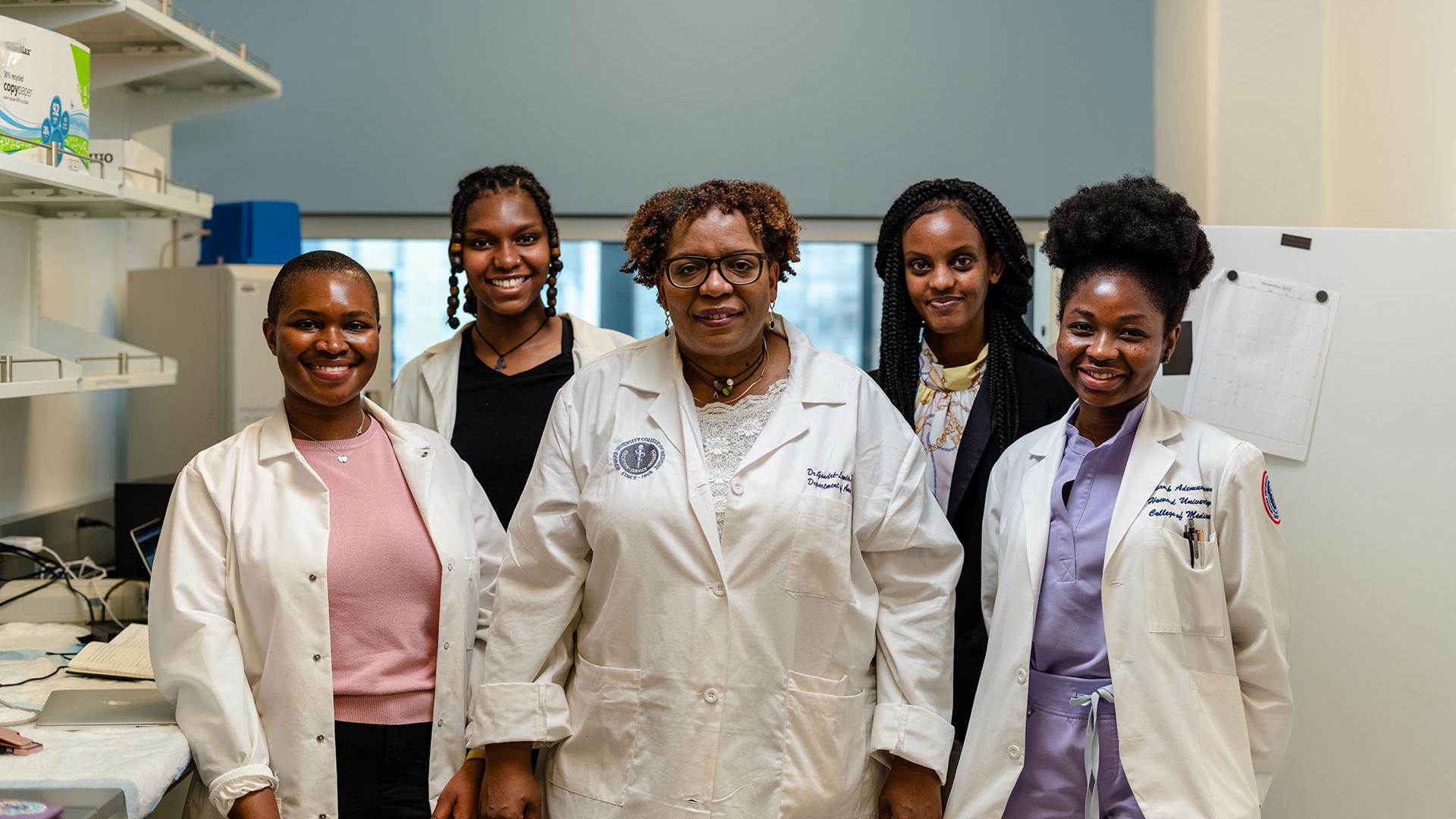
Bernard Kwabi-Addo, Ph.D. is a professor of biochemistry and molecular biology at the Howard University College of Medicine. He is also a principal investigator of prostate cancer research at Howard University. His research interests are: molecular biology/ biochemistry: cancer health disparities, signal transduction, gene expression and regulation, epigenetic DNA methylation studies and prostate cancer research.
The focus of Kwabi-Addo's current research activity is to elucidate aberrant epigenetic alterations that underlies prostate cancer etiology and the disease progression, a disease that disproportionately impact men of African Ancestry. The ultimate goal of his research work is to identify novel epigenome-derived markers that can be used either alone or in conjunction with current molecular markers for screening and diagnosing prostate cancer disparity. He is also interested in understanding the social determinants and environmental factors and how these impact the genome to drive not only prostate cancer but cancer in general and cancer disparities.
Kwabi-Addo is a lecturer on various biochemistry and molecular biology topics to medical, dental and graduate students at Howard University. He is an educator on public health concerns on topics such as cancer prevention and the importance of adhering to the recommended age-appropriate screening, the importance of healthy dietary patterns, avoidance of sedentary lifestyle and the adoption of healthy behavior and lifestyle patterns to avoid and even reverse or eliminate chronic diseases.
His research is dedicated to unraveling the molecular mechanisms of fibroblast growth factor signaling, PTEN haploinsufficiency, and the negative regulation of receptor tyrosine kinase signaling in prostate carcinogenesis. Currently, his laboratory focuses on studying the roles of genome-wide and loci-specific DNA methylation alterations in prostate cancer disparities. His research work has received funding from the National Institutes of Health (NIH) and the Department of Defense (DoD).
Beyond his research endeavors, he is also deeply passionate about educating the public through community-outreach events on the scientific evidence of cancer prevention and the importance of adhering to appropriate age-recommended screening. Kwabi-Addo advocates for adopting a healthy lifestyle to prevent and combat chronic diseases and has authored multiple books addressing health disparities, cancer prevention and the adoption of healthy lifestyles to prevent chronic diseases.
Molecular Biology
Queen Mary and Westfield College-University of London, UK
1997
Molecular Biology and Biotechnology
University College London-University of London, UK
1992
Biochemistry
University of Dundee, Dundee, Scotland (UK)
1991
Specialty Areas: Cancer Research, Health Disparities, Cancer Prevention, Translational Studies, Biomarker Discovery and Development
I have expertise in biochemical and molecular biology skills relevant for cancer and health disparities research. The current focus on my research laboratory is to elucidate aberrant global and loci-specific epigenetic alterations associated with aggressive prostate cancer in African American men. The goal of my laboratory is to identify novel epigenetic-based biomarkers for cancer detection and to explore epigenetic alterations in cancer for novel therapeutic angles.
I give didactic lectures in Blood Coagulation, Hormonal signals, Cancer topics and other lectures in Biochemistry and Molecular Biology to Medical, Dental and graduate students.
Principal Investigator: Grant Period (RO1): 07/01/2019 - 06/30/2025. My role is the overall administration, design and analysis of experiments proposed in this grant. In addition, I am responsible for publishing any reportable outcome from the project. My effort contribution (10 % effort) for the entire duration of the project.
Title: Epigenetic Regulated Genes in African American Prostate Cancer Patients. Grant Mechanism: National Institute of Minority Health and Health Disparities U54 MD007579 to Howard University RCMI: Total direct cost $1,250,000.00).
Dr. Krishma Tailor (post-doctoral researcher)
Dr. Mohammad Khan (Senior postdoctoral researcher)
Identification of "ethnic sensitive" epigenetic DNA methylation markers for cancer detection. Epigenetic changes can occur early in cancer development, even before clinical symptoms appear. The identification of epigenetic biomarkers in blood or tissue samples has the potential to facilitate early cancer detection and improve patient outcomes.
Read: The Hilltop | Howard Genetics Program To Receive $11.5 Million
Read: Modern Ghana | ‘Health Outcomes in a Foreign Land’ authored by Dr. Bernard Kwabi-Addo targets Diaspora Africans
Read: Modern Ghana | Dr. Bernard Kwabi-Addo Of Howard University Seeks “Ethnic Sensitivity” In Cancer Research
Check the FATS: Eliminate Chronic Diseases
In Check the FATS: Eliminate Chronic Diseases, Bernard Kwabi-Addo discusses how the human body has designed complex and integrated metabolic process that involves several factors such as hormones, gut microbiome, circadian rhythm/sleep pattern, genetic traits, and exposures to the current obesogenic environment in regulating energy intake from diet and energy expenditure as well as energy storage in the form of fat. Thus, disruption in any of these processes can and do contribute to obesity and chronic diseases.
Check the FATS then discusses lessons from our ancestors who did not have chronic diseases and presents the scientific evidence in support of the role of poor dietary components and sedentary lifestyle and their association with chronic diseases whereas healthy dietary interventions can reverse and even eliminate chronic diseases.
Health Outcomes in a Foreign Land:A Role for Epigenomic and Environmental Interactions
This stimulating volume uses multiple lenses to analyze the complex causes of health disparities affecting minorities, in particular African Americans, and explains how this knowledge can be used to reduce their destructive effects. Pinpointing genetic, non-genetic, and epigenetic factors underlying health conditions common to the population—including heart disease, hypertension, diabetes, and cancer—the author traces intricate links among these factors in the current environmental and social context. The section on non-genetic factors in health disparities, such as social determinants and health behaviors, adds depth to the ongoing discourse on public health and health policy objectives. And the chapters on gene/environment interactions outline the vast potential for developing new multidisciplinary frontiers in shrinking health inequities and personalizing care.
Cancer Causes and Controversies: Understanding Risk Reduction and Prevention
Cancer Causes and Controversies: Understanding Risk Reduction and Preventiondescribes common risk factors associated with particular types of cancer, including genetic predisposition, radiation and chemical carcinogens, diet, hormonal factors, infection, and smoking.
Chapter 10: Epigenetic Biomarkers and Racial Differences in Cancer in Epigenetic Mechanisms in Cancer Vol. 3, 1st Edition. (pp. 243-273).
The reason for the persistent cancer disparities in incidence and mortality among different ethnic and racial groups is not fully known. The risk factors for cancer disparities are multifactorial and arise from a combination of socioeconomic determinant, environmental, and genetic factors. Epigenetic changes, in particular DNA methylation, start early in life even at the prenatal stage and increase as a function of age among different racial and ethnic groups. Thus aberrant epigenetic events offer potential mechanism for perpetuating the effects of early life exposures setting the stage for future disease outcomes including cancer. Few studies showed significant differences in epigenetic events in different racial and ethnic groups. These epigenetic changes can be associated with cancer initiation, progression, aggressiveness, and disease outcomes. Therefore, concerted efforts are needed to understand the causes of aberrant epigenetic changes in cancer disparities to reduce cancer health disparities.
African American (AA) men have the highest incidence and mortality rate from Prostate cancer (PCa) than any other racial/ethnic group. To date, PCa genomic studies have largely under-represented tumour samples from AA men. We measured genome-wide DNA methylation in benign and tumor prostate tissues from AA men using the Illumina Infunium 850 K EPIC array. mRNA expression database from a subset of the AA biospecimen were used to assess correlation of transcriptome and methylation datasets.
Low socioeconomic status neighborhood exposure to stress and violence may be sources of negative stimuli that poses significant health risks for children, adolescents and throughout the life course of an individual. The study aims to investigate if aberrant epigenetic DNA methylation changes may be a potential mechanism for regulating neighborhood exposures and health outcomes.
DNA methylation at CpG sites is a vital epigenetic modification of the human genome affecting gene expression, and potentially, health outcomes. However, evidence is just budding on the effects of aerobic exercise-induced adaptation on DNA methylation in older mild cognitively impaired (MCI) elderly African American (AAs). Therefore, we examined the effects of a 6-month aerobic exercise-intervention on genome-wide DNA methylation in elderly AA MCI volunteers.
RASAL2 suppresses the proliferative and invasive ability of PC3 prostate cancer cells
The RAS protein activator like 2 (RASAL2) negatively regulates RAS proto-oncogene which is activated by high mutation rate in cancer. Thus, RASAL2 expression could potentially limit the function of RAS in prostate cancer (PCa). Genome-wide DNA methylation analysis demonstrated that RASAL2 is differentially hypermethylated in PCa tissues compared to benign prostate tissues. The PCR analysis of RASAL2 mRNA transcript showed differential expression in a panel of prostate cell lines with most PCa showing lower RASAL2 expression compared to benign prostatic epithelial cells. In PCa PC3 cells, the ectopic expression of RASAL2 significantly inhibited cell proliferation and invasion and induced an S phase plus G2/M phase cell cycle arrest. Ingenuity Pathway Analysis (IPA) demonstrated a cross talk between RASAL2 and TNFα, a key cytokine in immune signaling pathway that is relevant in PCa. Over-expression of RASAL2 downregulated TNFα expression whereas the knockdown of RASAL2 caused increased expression of TNFα. Taken together, our data demonstrates tumor suppressor role for RASAL2 in human PCa cells, despite increased RAS oncogenic activity. Our observation provides a new mechanistic insight of RASAL2 expression in aberrant Ras expression and immune signaling in PCa cells suggesting a potential novel therapeutic target for PCa.
Complete list of my published work can be found online here.
The doctor and author takes a fresh look at cancer risk factors and preventative measures.